In product development, not every challenge arrives neatly defined. Some push you into unfamiliar territory—where data is limited, timelines are tight, and expectations are uncompromising.
This was exactly the case when we were appointed to develop a prototype mould tool for a highly technical automotive component.
The Challenge
From the outset, this wasn’t a straightforward project.
The component required:
- Extremely tight tolerances
- Controlled flexibility within the part
- A sustainable material choice – polypropylene with post-consumer recycled content (rPP)
While each of these requirements is manageable on its own, the combination created a unique engineering challenge.
But the real complication emerged before we even cut aluminium.
The Unknown Variable
As part of our standard process, we always conduct a mould flow analysis. This simulation allows us to predict how molten polymer will behave as it fills the tool—critical for avoiding defects and ensuring part quality.
However, this time, there was a problem.
The specific grade of recycled polypropylene specified by the customer was so new that it wasn’t recognised by our Moldflow software.
That meant no accurate simulation model. No reliable baseline.
At that point, we had two options:
- Delay the project until material data became available
- Or move forward using engineering judgement
We chose the latter.
A Calculated Approach
We selected the closest available material match within the software and proceeded with the mould flow analysis—fully aware that it would only give us an approximation, not a definitive answer.
This meant one thing:
Success would depend on trial, iteration, and persistence.
The Reality of Development
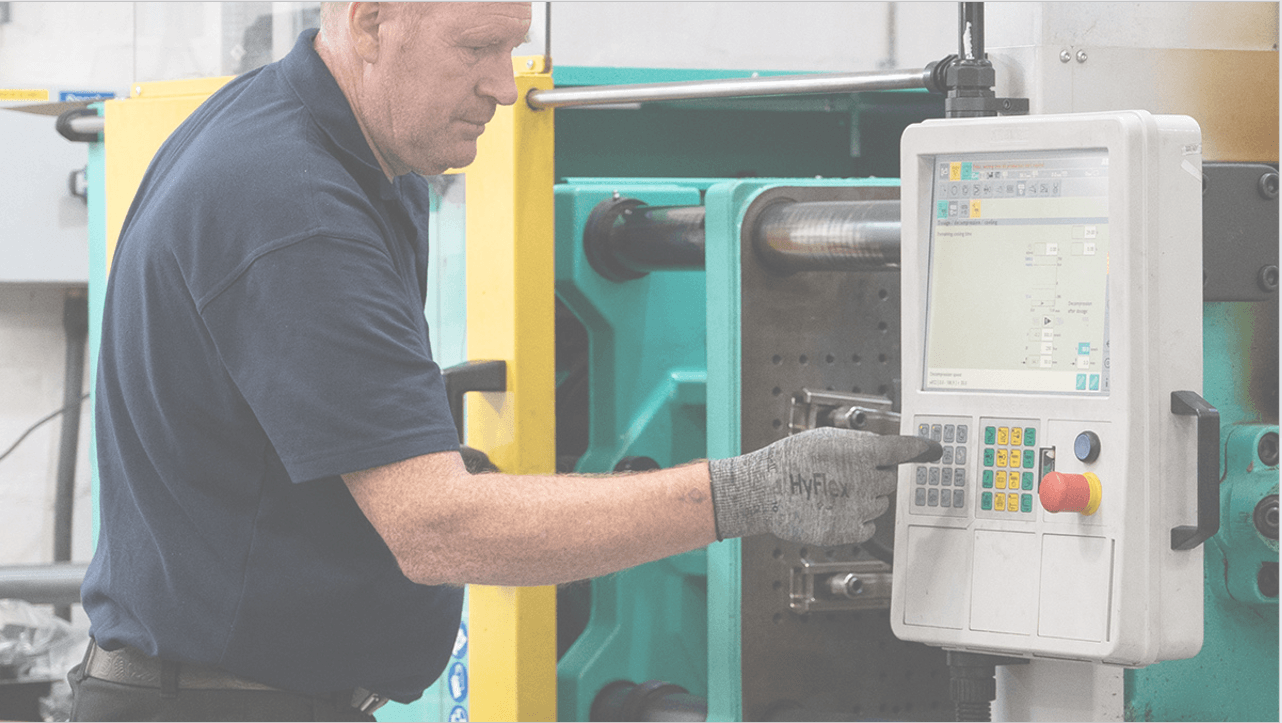
The tool was built within four weeks, and moved into the mouldshop ready for its first trial.
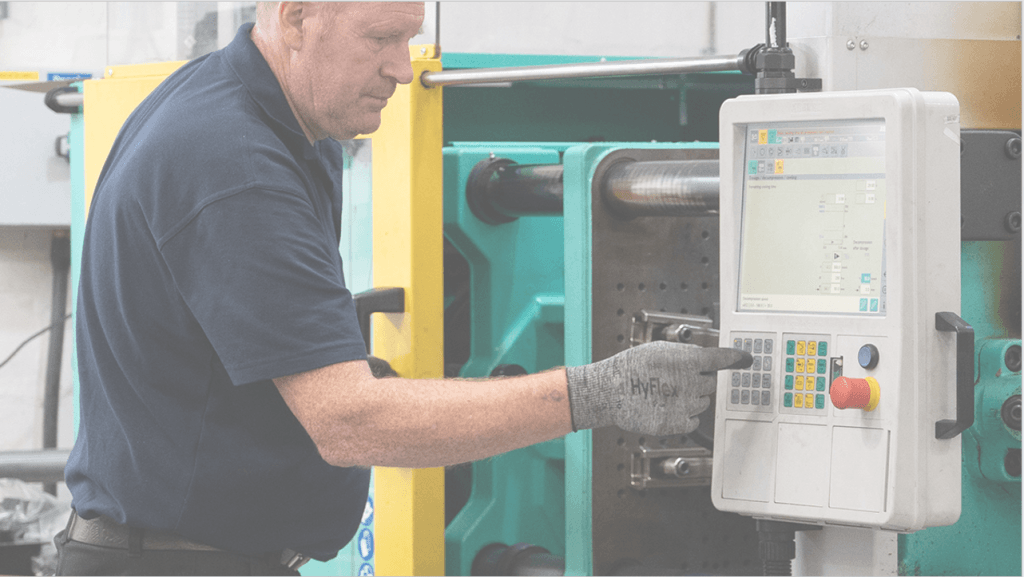
Over the course of two weeks, we ran six separate mould trials.
Each trial involved:
- Adjusting processing parameters
- Monitoring how the material behaved in real conditions
- Evaluating part performance against specification
It wasn’t linear progress.
There were setbacks. There were moments of uncertainty. And with a demanding application and tight deadlines, there was inevitable pressure across the team.
To maintain momentum, we extended production shifts—even running into a Sunday—to ensure we could keep learning, refining, and moving forward.
The Turning Point
With each iteration, we built a clearer understanding of how this new rPP material behaved—something no simulation could fully provide.
And eventually, everything aligned:
- The part met its dimensional tolerances
- The required flex characteristics were achieved
- The process stabilised
The Outcome
The final result?
Approved components delivered with a full ISIR sign-off.
But more than that, the project demonstrated something we believe is just as important as technical capability:
The willingness to stay with a problem until it’s solved properly.
What This Means for Our Customers?
Projects like this aren’t just about tooling or materials—they’re about partnership.
When the path isn’t clearly defined:
- We don’t step back
- We don’t cut corners
- And we don’t rely solely on assumptions
Instead, we commit the time, effort, and expertise needed to truly understand both the material and the expectation.