“Soft tooling” is one of those terms that sounds straightforward… until you look a little closer.
Depending on who you ask, it can mean anything from a quick prototype tool to something expected to last fewer than 100 shots.
From an engineering perspective, that’s a pretty wide range for a single label.
Advanced Tooling, Outdated Assumptions
Traditionally, “soft tooling” has been associated with low-life tools—useful for early-stage validation, but not designed for longevity or repeatability.
The issue is, the terminology hasn’t kept pace with the technology.
Today, aluminium tooling can deliver far more than the name suggests—yet the perception often remains stuck in the past.
A Different Standard
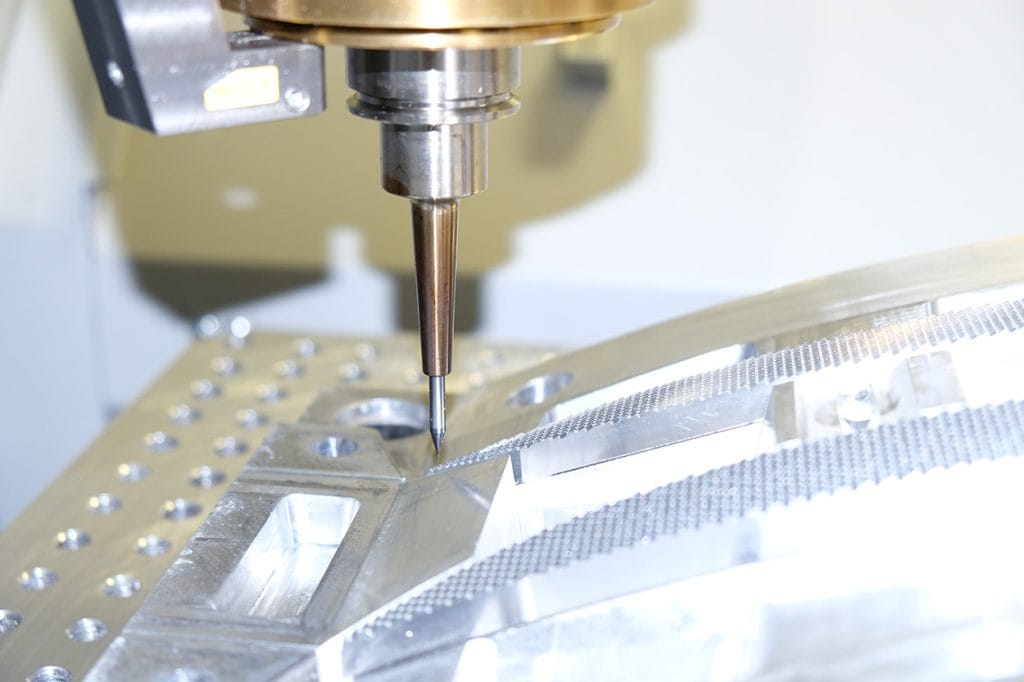
At Dudley, our aluminium tooling is manufactured from tooling-grade aluminium, selected not just for machinability, but for its thermal conductivity, dimensional stability, and consistent processing performance.
Compared to steel, aluminium enables faster heat transfer—supporting reduced cycle times and more uniform cooling.
Combined with robust tool design and process control, this allows tool life of up to ~40,000 shots, depending on application and material.
Which raises a fair question…
Is It Really “Soft”?
If a tool can produce tens of thousands of consistent, high-quality parts—
is “soft” still the right word?
Or is it simply a legacy term that no longer reflects current capability?
A More Useful Way to Think About It
Rather than focusing on “soft” vs “hard,” it’s more meaningful to consider fitness for purpose.
Aluminium tooling offers a compelling balance of:
- Speed to manufacture
- Lower upfront investment
- Reliable, repeatable output
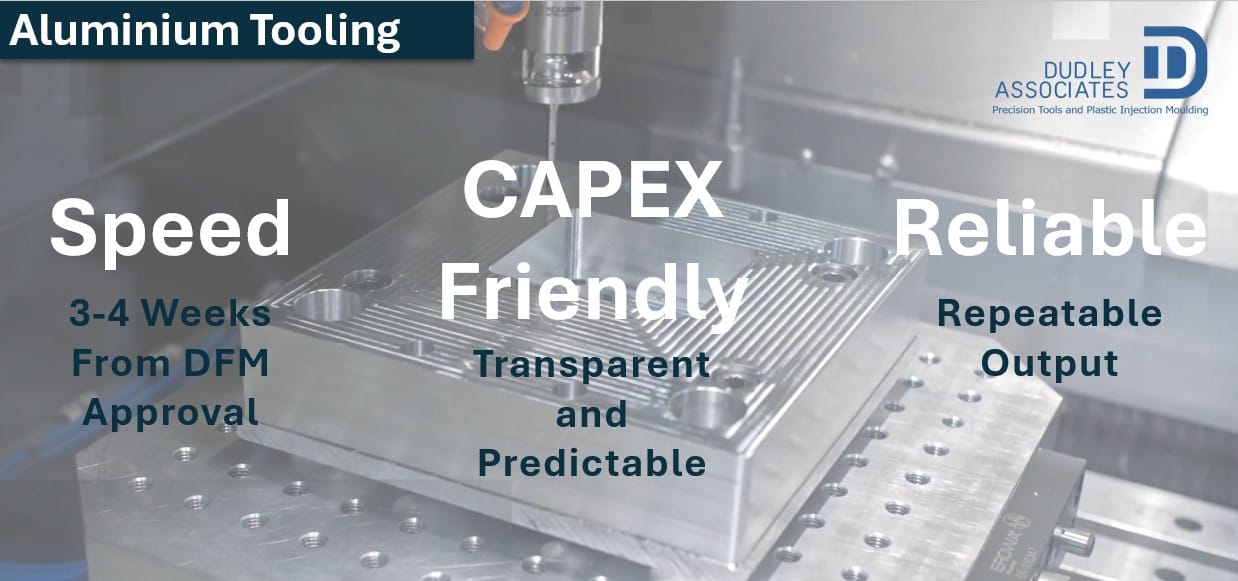
Making it ideal for:
• Functional and regulatory validation
• Bridge-to-production phases
• Low-to-medium volume manufacture
In many cases, it’s not a compromise—it’s a strategic choice.
Built with Intent
We take pride in delivering tooling that performs exactly as required—reliably, repeatedly, and without surprises.
Because while the material may be softer than steel,
the performance tells a very different story.