Author: Katie Weston | Technical Sales Manager | Plastic Injection Moulding & Toolmaking
Championing Wider Participation in UK Manufacturing.
Let’s.Do.Better.
What if young people are not rejecting manufacturing? What if we have simply failed to show them what modern engineering looks like, who it needs and where they could fit?
The UK manufacturing skills gap is usually discussed at the point of recruitment. Vacancies stay open. Experienced people retire. Employers struggle to find the technical capabilities they need.
But the problem begins much earlier than the job advert. It begins when a young person reaches their teenage years without visiting a factory, handling a manufactured component or meeting anyone who works in engineering.
It begins when manufacturing is presented as one narrow career for one narrow type of person.
Manufacturing needs more than traditional engineers
In reality, no successful engineered product is created by one person, one department or one type of mind.
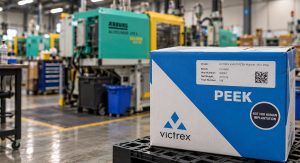
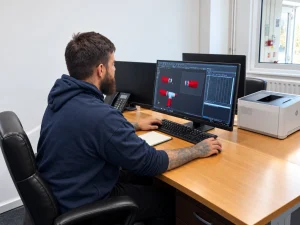
The journey might begin with someone in marketing or sales listening to a customer and identifying a need. Designers and technologists turn that need into a workable concept. Programmers, toolmakers and precision fitters create the tooling. Moulding technicians develop a stable, repeatable production process. Quality teams test, measure and challenge the result. Stores and logistics make sure the finished product reaches the right place at the right time.
Finance supports decisions throughout, helping the business balance innovation with investment, cost, cash flow and commercial risk.
Every role brings different questions to the table:
Can we make it? Will it work? Can we manufacture it repeatedly? Can we measure it? Can we afford it? Will the customer value it?
Good engineering decisions happen when all those perspectives come together.
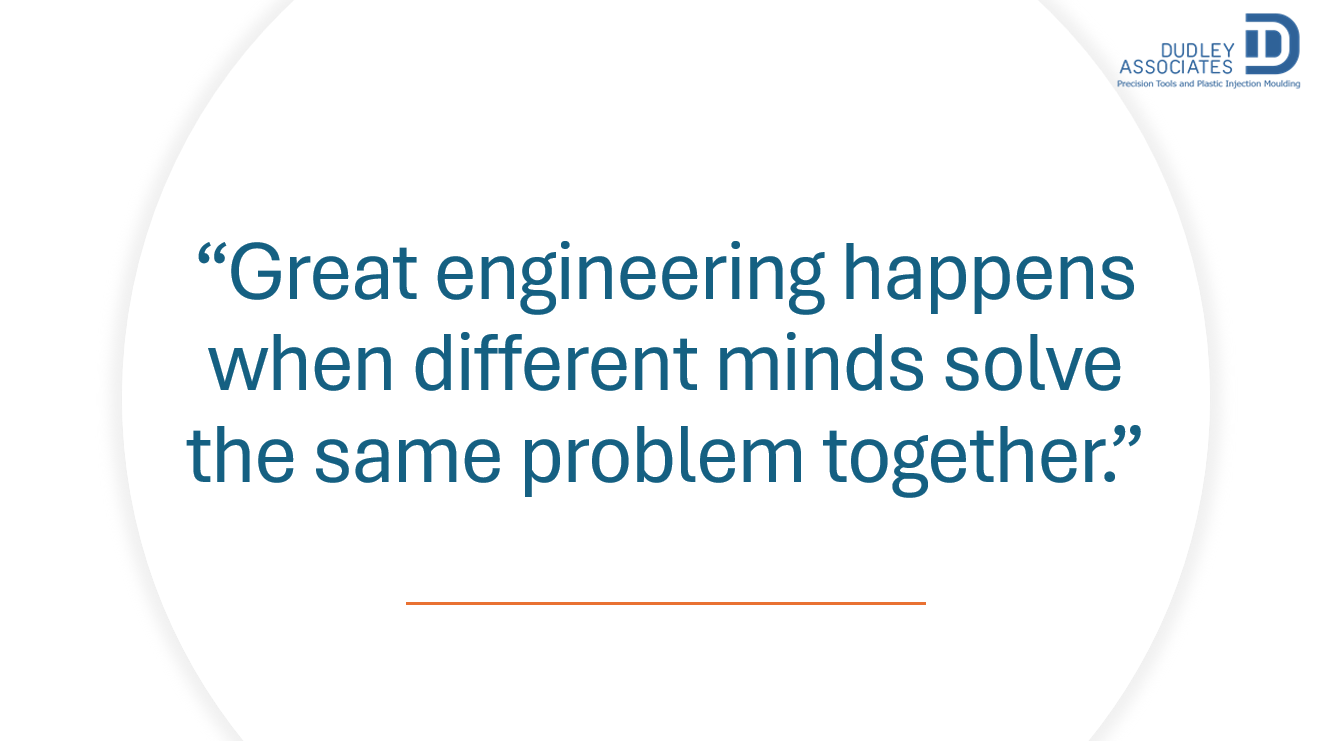
That means manufacturing needs practical thinkers, creative minds, coders, communicators, problem-solvers, organisers, analysts and commercially minded people. There is no one-size-fits-all route into the industry, and you do not need to see yourself as a traditional engineer to make an important contribution.
We need young people to understand that there could be a place for their particular strengths within manufacturing.
That is why National Manufacturing Day matters.
Opening the doors to modern manufacturing
On Thursday 24 September 2026, manufacturers across the country will take part in National Manufacturing Day.
At Dudley Associates, we will welcome Year 8 and 9 students from two local schools for a behind-the-scenes look at product development, in-house toolmaking and plastic injection moulding.
We are also delighted to confirm that Alberto Costa MP will join us on the day to meet the students and see first-hand how UK injection moulding, toolmaking and manufacturing careers are evolving.
His attendance will help shine a spotlight on an issue that matters far beyond our own factory: how we inspire more young people, from every background and with many different talents, to see a future for themselves in British manufacturing.
This is not simply a factory tour. It is an opportunity to make manufacturing visible.
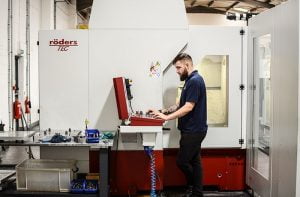
Students will be able to see how an idea becomes a component, how a mould tool is created, how a moulding process is controlled and how different people work together to achieve reliable production.
They will also see that a successful engineering business needs far more than engineers alone.
The UK manufacturing skills gap in numbers
The scale of the challenge is difficult to ignore.
The Make UK Industrial Strategy Skills Commission estimated that UK manufacturing had 55,000 long-term unfilled vacancies in 2025, costing the economy around £6 billion in lost output each year.
The problem reaches beyond traditional factory roles.
- 76% of employers struggled to recruit people with certain skills, according to the IET’s 2025 engineering and technology skills research.
- Innovative thinking, technical knowledge and specialist digital skills are among the capabilities businesses expect to need most in the coming years.
- Design and Technology GCSE entries fell by 67% in England between 2011 and 2023.
- Only 43% of young people took part in a STEM activity outside the classroom in 2023.
- Just 15% of young people eligible for work experience completed a STEM-related placement.
These findings appear in EngineeringUK’s policy priorities for investing in the future.
Together, these figures reveal a national recruitment problem and an education pipeline that makes it increasingly difficult to solve.
By the time a manufacturer advertises a vacancy, the skills gap may already be years old.
Why injection moulding feels the pressure so sharply
Plastic injection moulding is one of the most visible invisible industries in Britain.
Moulded components sit inside electronics, medical devices, vehicles, defence equipment, safety products and countless everyday objects. Yet many people reach adulthood without knowing how those parts are made or how many different careers sit behind them.
- The UK plastics industry includes approximately 5,700 companies.
- It generates around £32.8 billion in annual turnover.
- The sector directly employs approximately 160,000 people, according to British Plastics Federation figures compiled from ONS data.
- Despite its scale, the BPF reports a growing skills gap and an ageing workforce across plastics manufacturing.
- In the BPF’s June and July 2023 Business Conditions Survey, 60% of respondents said they were experiencing difficulty recruiting staff.
- Among businesses struggling to recruit:
- 63% reported shortages in shop-floor roles.
- 58% reported difficulty recruiting engineers.
- Skills shortages were also reported across sales, management, supervision, apprenticeships and technical management.
Together, these figures show that the plastics industry is economically significant, but its future talent pipeline is under increasing pressure.
The succession question cannot be ignored
Recruitment is only part of the risk. Succession matters too.
The British Plastics Federation has highlighted succession planning as a major issue for a sector containing many lean, family-run SMEs, with owners looking to retire within the next decade or sooner. There is no robust public percentage showing the age of every UK injection moulding business owner. It would be misleading to invent one.
The available evidence shows a clear and urgent direction of travel. Experienced owners, toolmakers, setters and technical specialists are approaching retirement. Their knowledge is rarely contained in a manual.
If the next generation is not entering the industry early enough, knowledge transfer becomes harder, capacity becomes tighter and valuable UK manufacturing capability becomes more vulnerable.
One open day will not solve a national crisis
National Manufacturing Day replaces abstraction with experience. A student can see a component move from idea to design, from steel tool to moulding machine, and from first-off part to repeatable production. They can meet the people who make that happen and discover that no single person does it alone.
One school visit will not close the skills gap. But it can change what a young person believes is possible.
We have to do better
The manufacturing skills gap is not something industry can complain its way out of. If manufacturers want young people to choose the sector, we must become more visible. We must explain careers in plain language, build stronger relationships with schools, widen the routes into the industry and invest in people early enough for knowledge to be passed on.
On 24 September 2026, Dudley Associates will open its doors to two local schools, with Alberto Costa MP joining us to support the day and its message.
The bigger task is to keep the pathway open after the students leave.
Quick answers
What is National Manufacturing Day?
National Manufacturing Day is a UK-wide initiative led by Make UK. Manufacturers open their doors to help schools, colleges, communities and other stakeholders understand modern manufacturing and the careers available within it.
Why does UK manufacturing have a skills gap?
The gap is driven by several connected issues, including an ageing workforce, retirement and succession risk, reduced exposure to practical STEM experiences, falling participation in some technical subjects and difficulty recruiting specialist technical and digital skills.
Does manufacturing only need engineers?
No. Engineering and manufacturing businesses need technical specialists as well as people with strengths in project management, quality, finance, sales, marketing, purchasing, data, operations, leadership and communication.
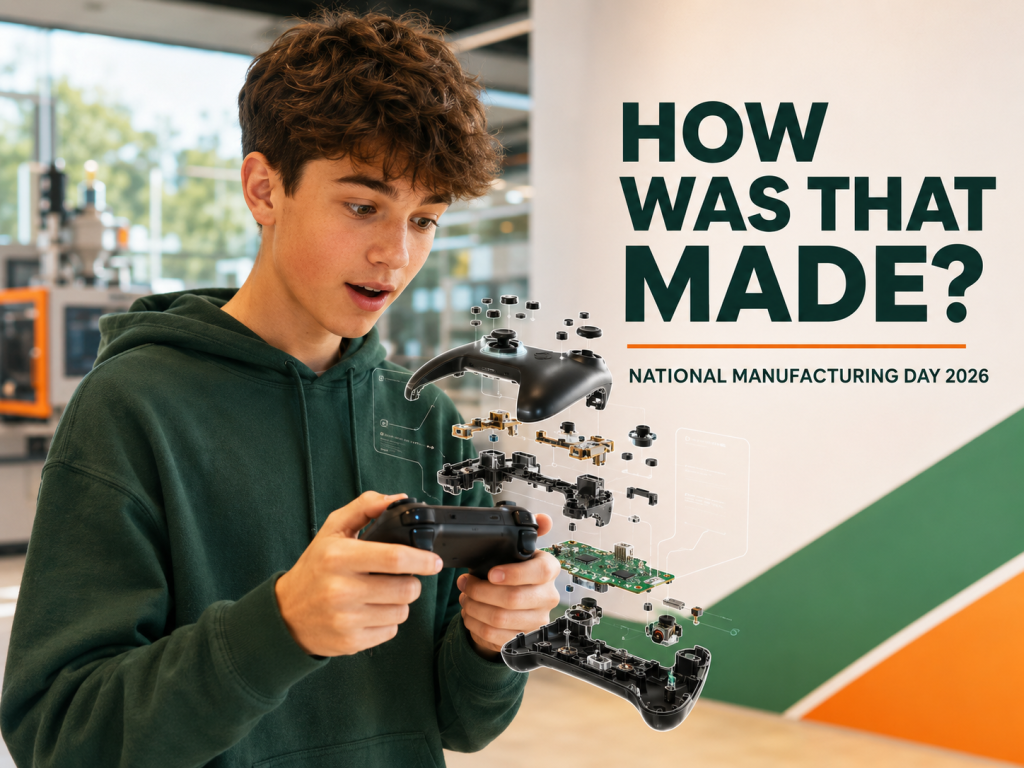
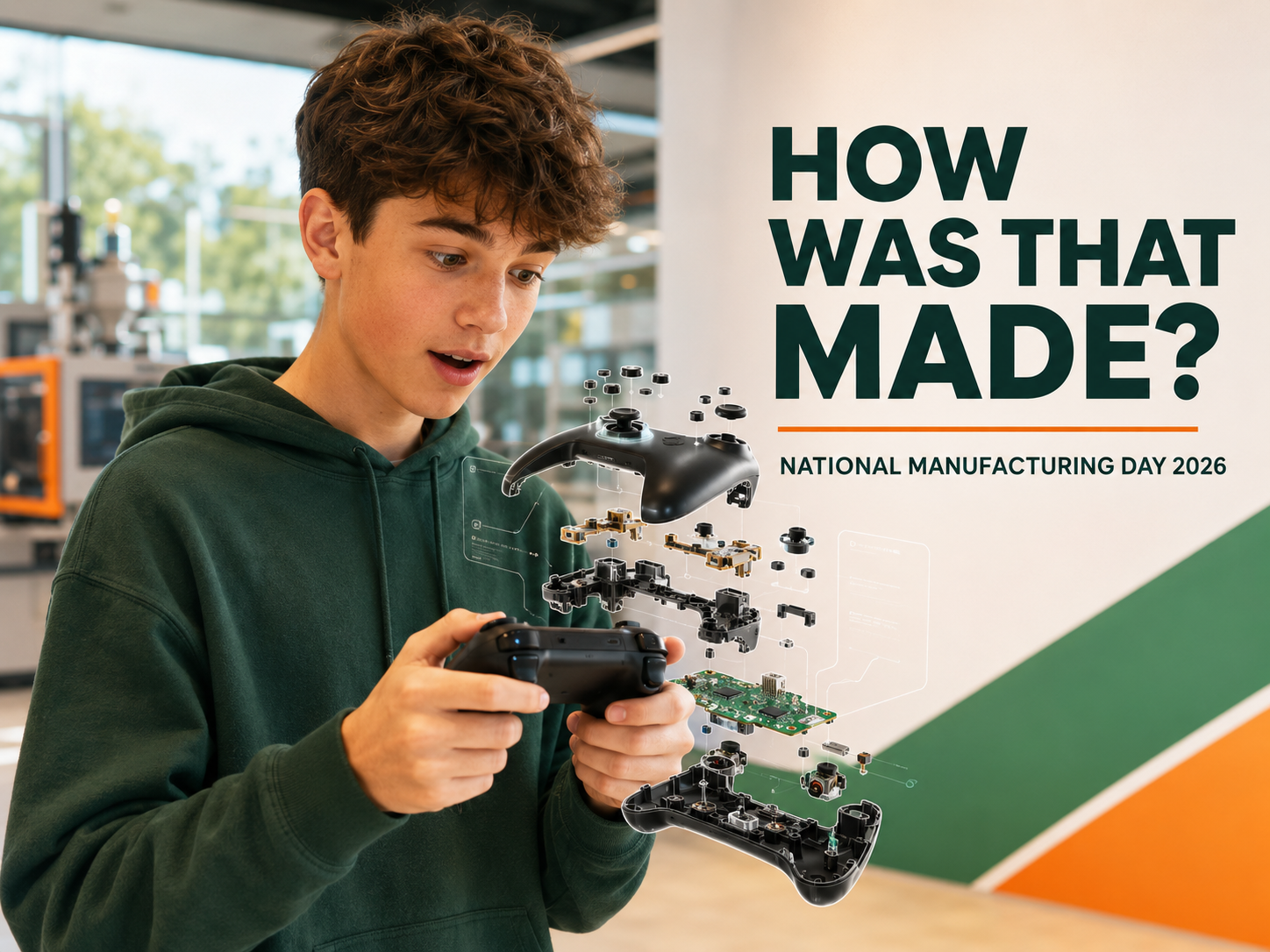
If you are constantly looking at everyday products and wondering, “How was that made?”, a career in engineering or manufacturing might be for you.
Stay curious. Ask questions. Come and discover where that curiosity could take you.
Sources and further reading
Make UK: National Manufacturing Day
Make UK: Industrial Strategy Skills Commission Report 2025
EngineeringUK: IET Engineering and Technology Skills Survey 2025
EngineeringUK: Policy Priorities, Investing in the Future
British Plastics Federation: Sources for the UK Plastics Industry
British Plastics Federation: Education and Skills
British Plastics Federation: Polymer Succession Planning Without the Drama
British Plastics Federation: Business Conditions Survey, June/July 2023