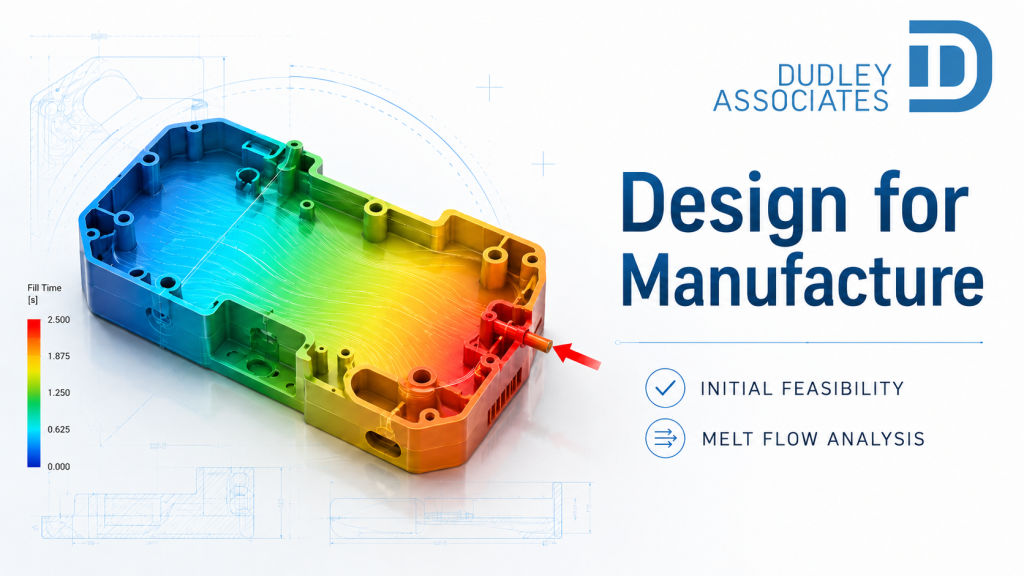
A plastic part may look simple… they rarely are.
When a customer sends an injection moulding enquiry to Dudley Associates, it can arrive in many different forms.
Sometimes it is a complete CAD model with 2D drawings, material information and annual volumes.
Sometimes it is a prototype.
Sometimes it is a sketch.
Sometimes it is an idea that still needs technical development.
That is completely normal.
The important question is not whether the design is perfect on day one.
The important question is:
How close is this part to being mouldable, repeatable and commercially viable?
That is where our design feasibility process begins.
At Dudley Associates, we do not simply quote anything and everything. Before we put a price against a mould tool, we review the concept, the geometry and the likely mouldability of the part.
A plastic injection mould tool is a significant investment.
And once metal is cut, changes become slower, more expensive and more disruptive.
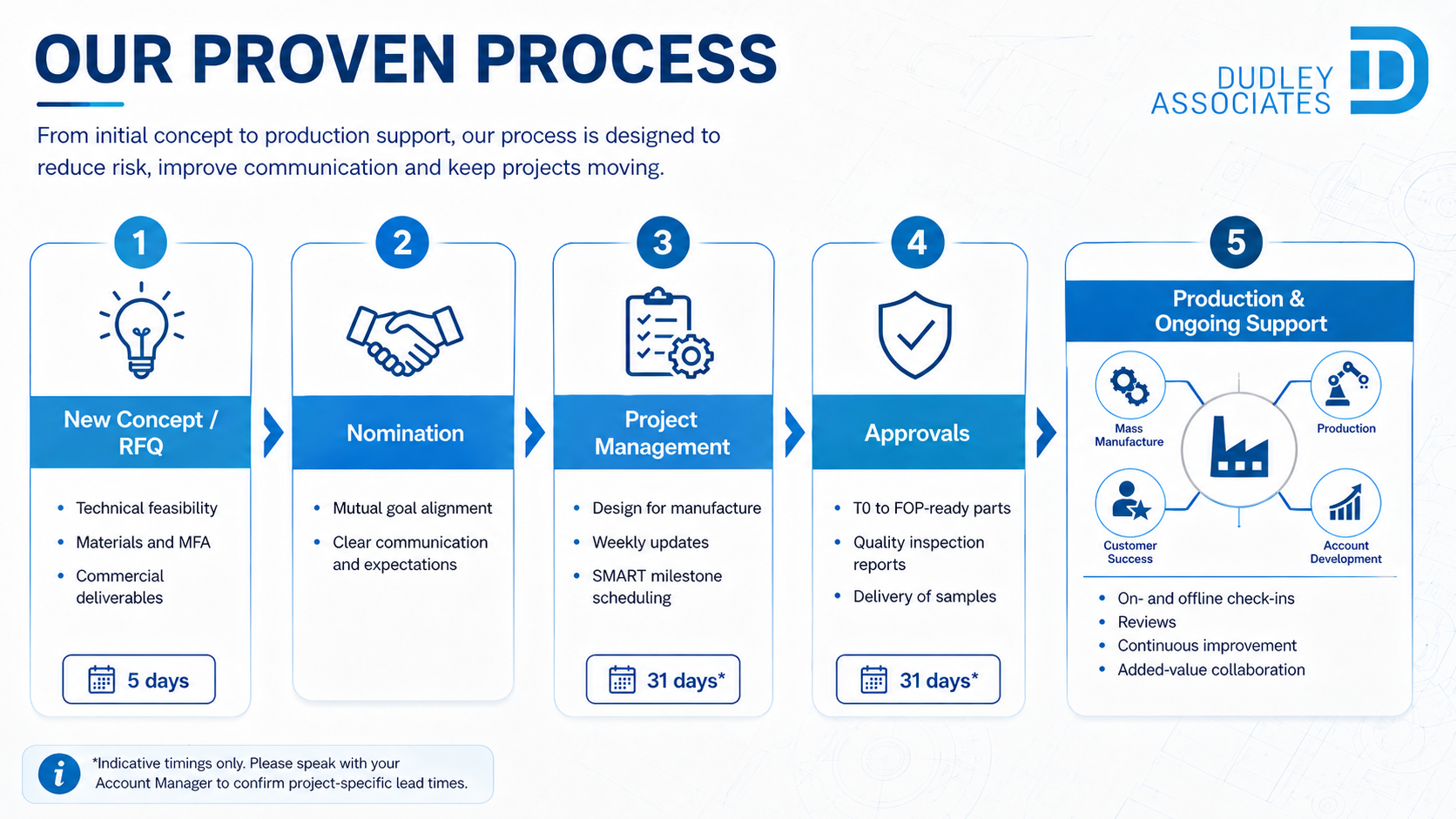
It starts with an RFQ, but not every RFQ is ready for tooling
An RFQ, or Request for Quotation, is the starting point for most tooling and injection moulding projects.
However, RFQs are not all the same.
Some arrive with mature design data. Others need further development before they are suitable for tooling.
That is why our first step is not simply to calculate a tooling price.
Our first step is to understand the project.
We look at the part, the application, the likely production requirements and the obvious technical risks.
In simple terms, we ask:
Can this component be injection moulded successfully in its current form, or does it need design work first?
If you are still at the concept development stage, our earlier blog “A Practical Guide to Turning an Idea into a Manufactured Injection Moulded Product” may also be useful.
Our first review: Initial Feasibility
Before producing a quotation, we carry out an initial feasibility review.
This is an early-stage technical assessment of whether the part looks suitable for injection moulding and whether there are any obvious risks that should be addressed before tooling is considered.
This review is typically completed within 48 hours, depending on the information supplied and the complexity of the component.
At this stage, we may consider questions such as:
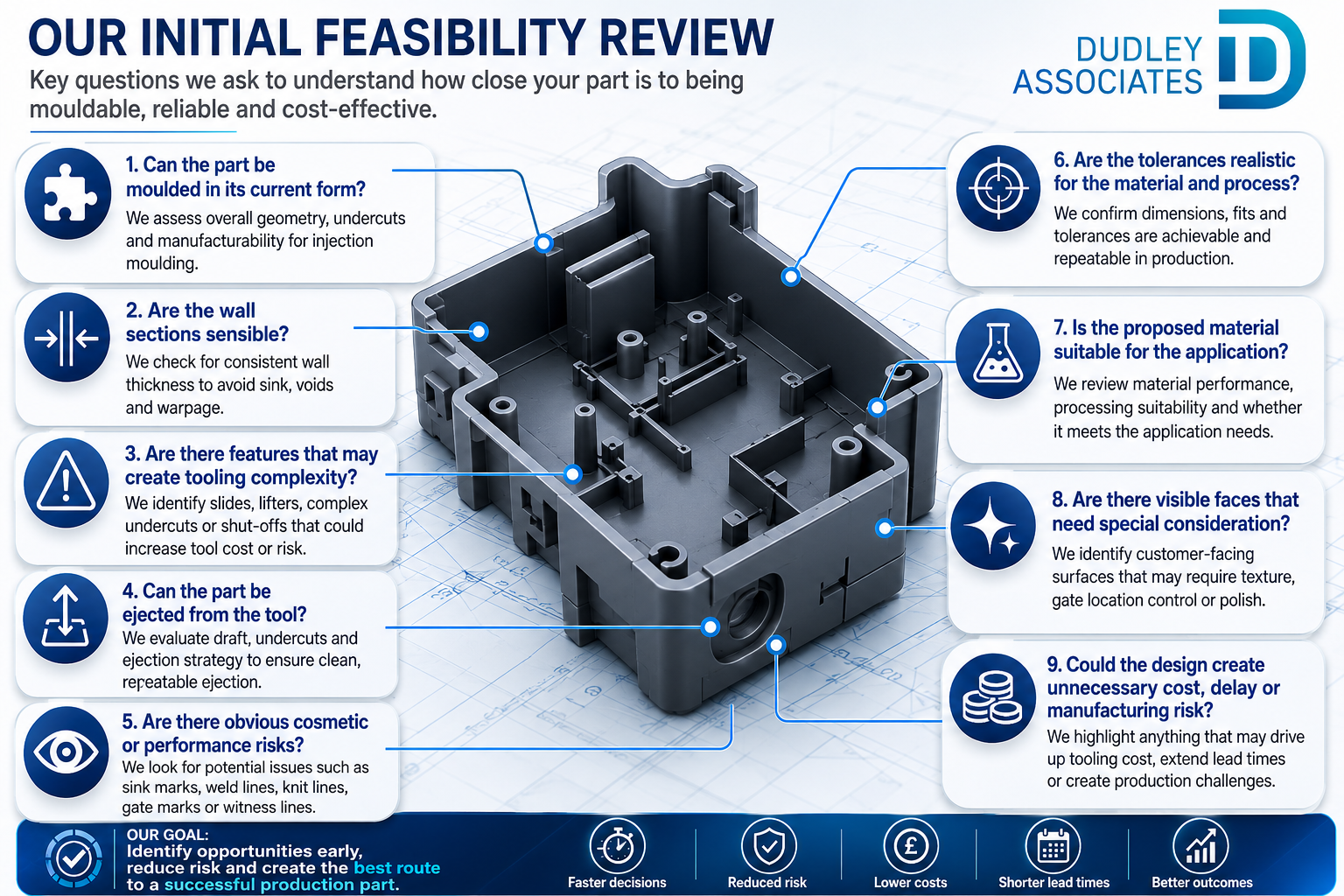
This initial review is not about criticising the design.
It is about understanding how close the product is to being ready for tooling.
Sometimes the answer is straightforward.
Sometimes a few changes are recommended.
A little more draft.
A wall section adjusted.
A rib redesigned.
A gate position reconsidered.
A visible face protected from a witness line.
A feature simplified to avoid unnecessary tool complexity.
Small changes at this stage can make a significant difference later.
Why we do not just “quote it”
Quoting a mould tool without reviewing feasibility might feel quicker at the beginning, but it can create problems later.
A part that looks simple on screen may still be difficult to mould.
A thick section may cause sink.
A flat surface may distort.
A visible face may show a weld line, gate mark or witness line.
A feature may require slides, lifters or additional tool movement.
A tolerance may be difficult to hold consistently in the chosen material.
That is why our approach is practical and honest.
If we believe a part needs further design consideration, we will say so. If the design is close, we will advise what needs refining. If it looks suitable, we can move forward with confidence.
This early review is absorbed by Dudley Associates because we believe good tooling projects start with good technical conversations.
We would rather give honest feedback early than ignore a problem until it becomes expensive.
The terminology matters, but the process matters more
Injection moulding comes with plenty of technical language.
You may hear terms such as:
| Design Terms | Tooling Terms | Moulding/Process Terms | Defect/Cosmetic Terms |
| Draft Angle | Mould Tool | Cycle Time | Flash |
| Wall Thickness | Core | Cooling Time | Sink mark |
| Rib | Cavity | Shrinkage | Warpage |
| Boss | Runner Systems | Packing Pressure | Weld Line |
| Undercut | Sprue | Holding Pressure | Knit Line |
| Coring out | Gate | Melt Flow Analysis | Witness Line |
| Tolerance | Sliders | Ejection | Gate Mark |
| Texturing | Loose Inserts | Venting | Ejector Pin Mark |
| Mouldability | Shut-off | Overmoulding | Brun Mark |
| DFM | Parting Line | Insert Moulding | Short Shot |
These terms are important because they describe how molten plastic behaves inside the mould and how the tool needs to control that behaviour.
However, the purpose of a feasibility review is not to overwhelm the customer with terminology.
The purpose is to explain what these issues mean for the product.
Will the part fill properly?
Will it eject cleanly?
Will it look right?
Will it assemble correctly?
Will it stay within tolerance?
Will it be repeatable in production?
Will the tool be practical to manufacture and maintain?
That is what matters.
For a full explanation of common injection moulding terminology, visit our glossary.
If the project moves forward, the next stage is DFM
Once Dudley Associates is nominated and the customer wants to proceed, we move into a more detailed Design for Manufacture (DFM) review.
DFM is where we review the CAD data, drawings, material requirements, functional requirements and cosmetic expectations in more detail.
A full DFM report is typically completed within one week, depending on the complexity of the part.
The aim is to identify anything that could affect:
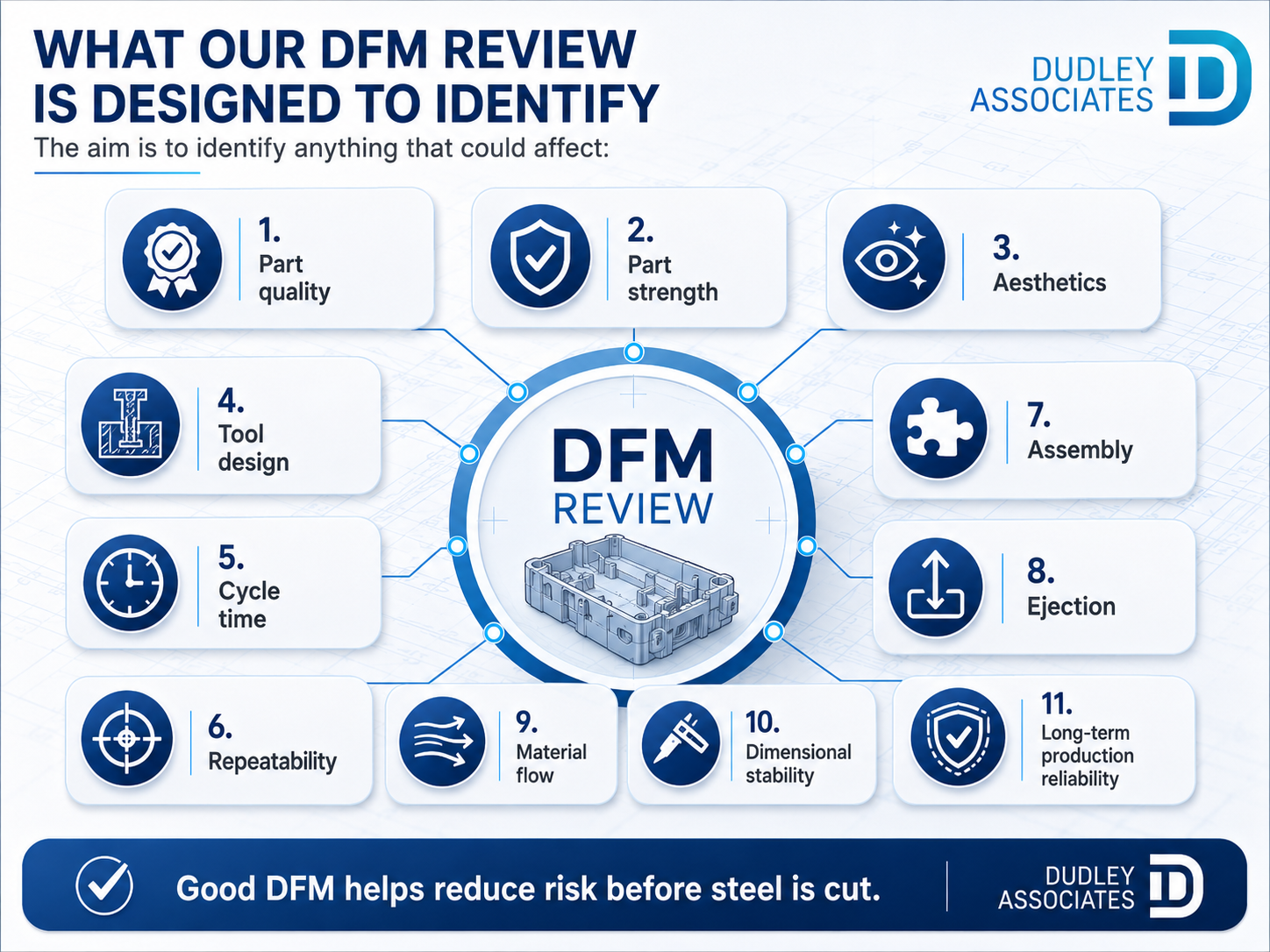
A DFM report is not a red pen exercise.
It is a technical review designed to make the product easier to manufacture, more consistent in production and less likely to create problems after tooling has started.
Where Moldex3D fits into the process
 As part of our tooling review process, Dudley Associates deploys Moldex3D software once a project is nominated and moving into detailed DFM.
In some cases, Moldex3D may also be used earlier during the initial feasibility stage, where the part geometry, material choice or application risk would benefit from deeper review.
Moldex3D allows us to simulate how molten plastic is likely to move through the mould cavity before the tool is manufactured.
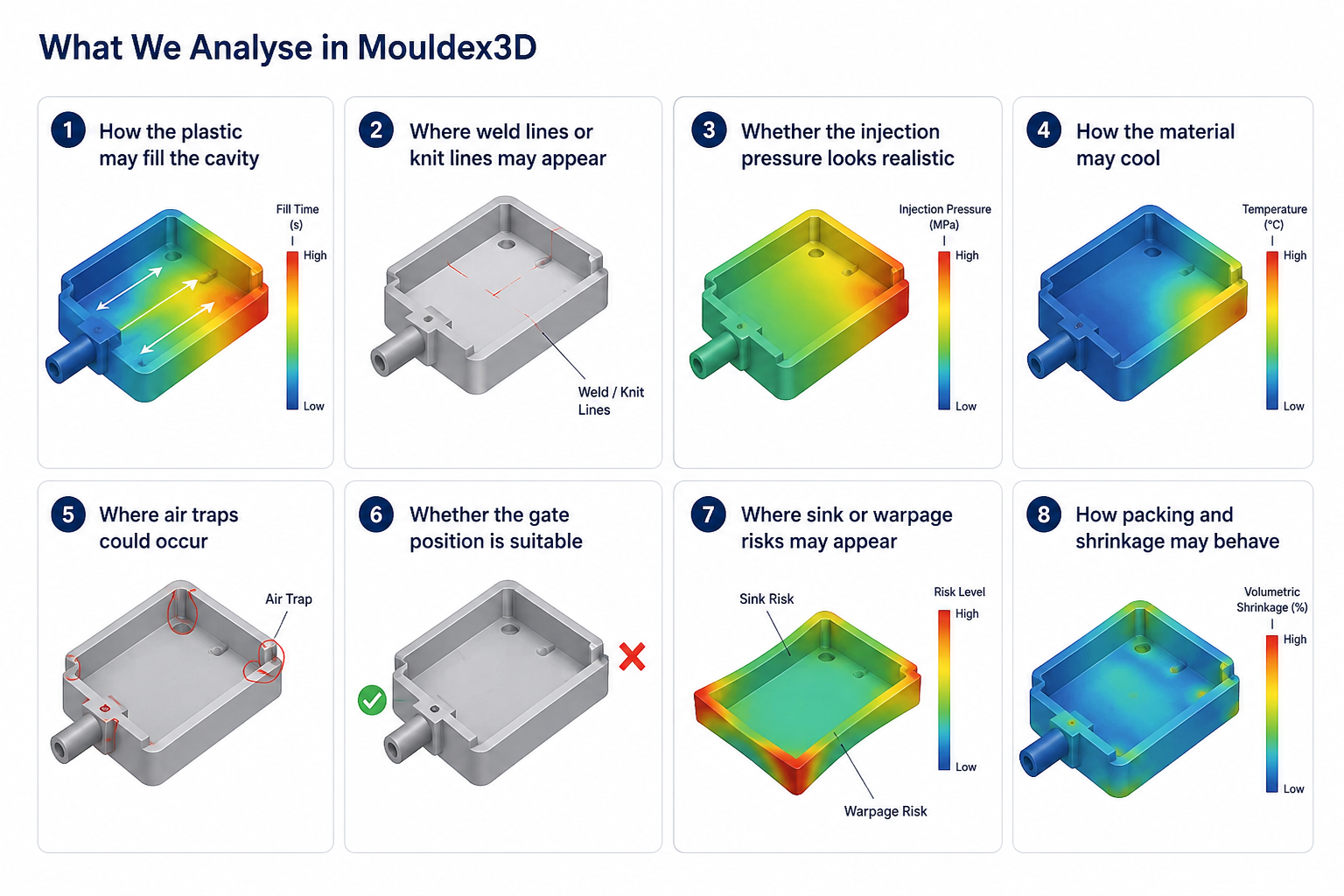
In plain English, Moldex3D is a simulation and helps us test moulding behaviour digitally before committing to manufacturing the tool.
It does not replace engineering judgement, but it gives valuable evidence to support better tooling decisions.
Finding a problem in simulation is far better than finding it during tool trials.
Changing CAD is easier than changing metal.
DFM is a conversation, not a criticism
A good DFM process should explain the reason behind each recommendation.
For example:
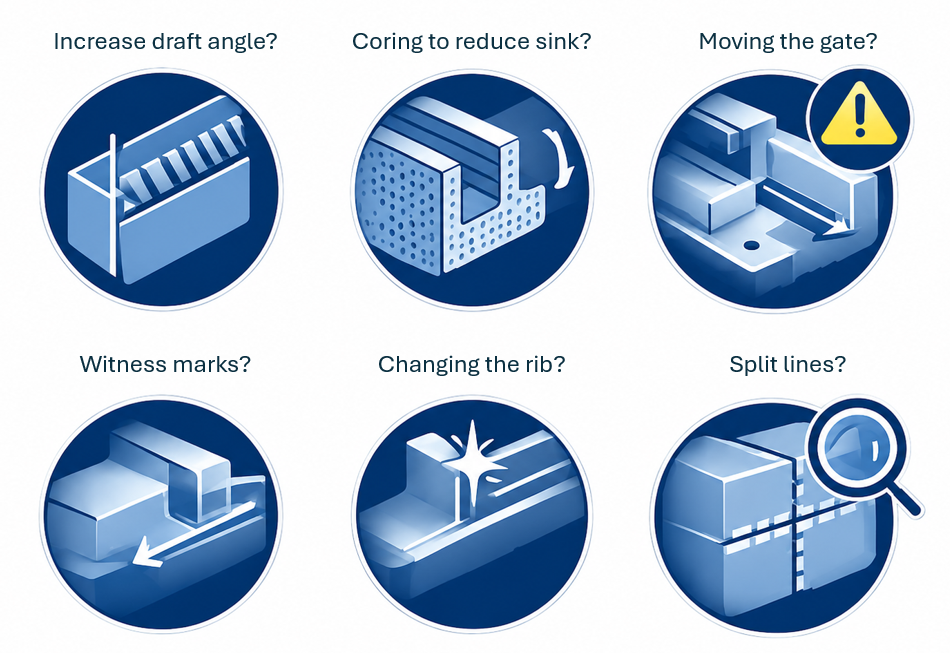
That is useful engineering feedback.
It gives the customer a clear reason, not just an instruction.
At Dudley Associates, we review the DFM findings with the customer, discuss the options and agree any changes before progressing.
No assumptions.
No hidden decisions.
No cutting metal until the customer has approved the direction.
Why this matters commercially
“Our process is deliberately front-loaded.”
Once a project moves into tooling and production, a small design issue can quickly turn into cost, delay or manufacturing disruption.
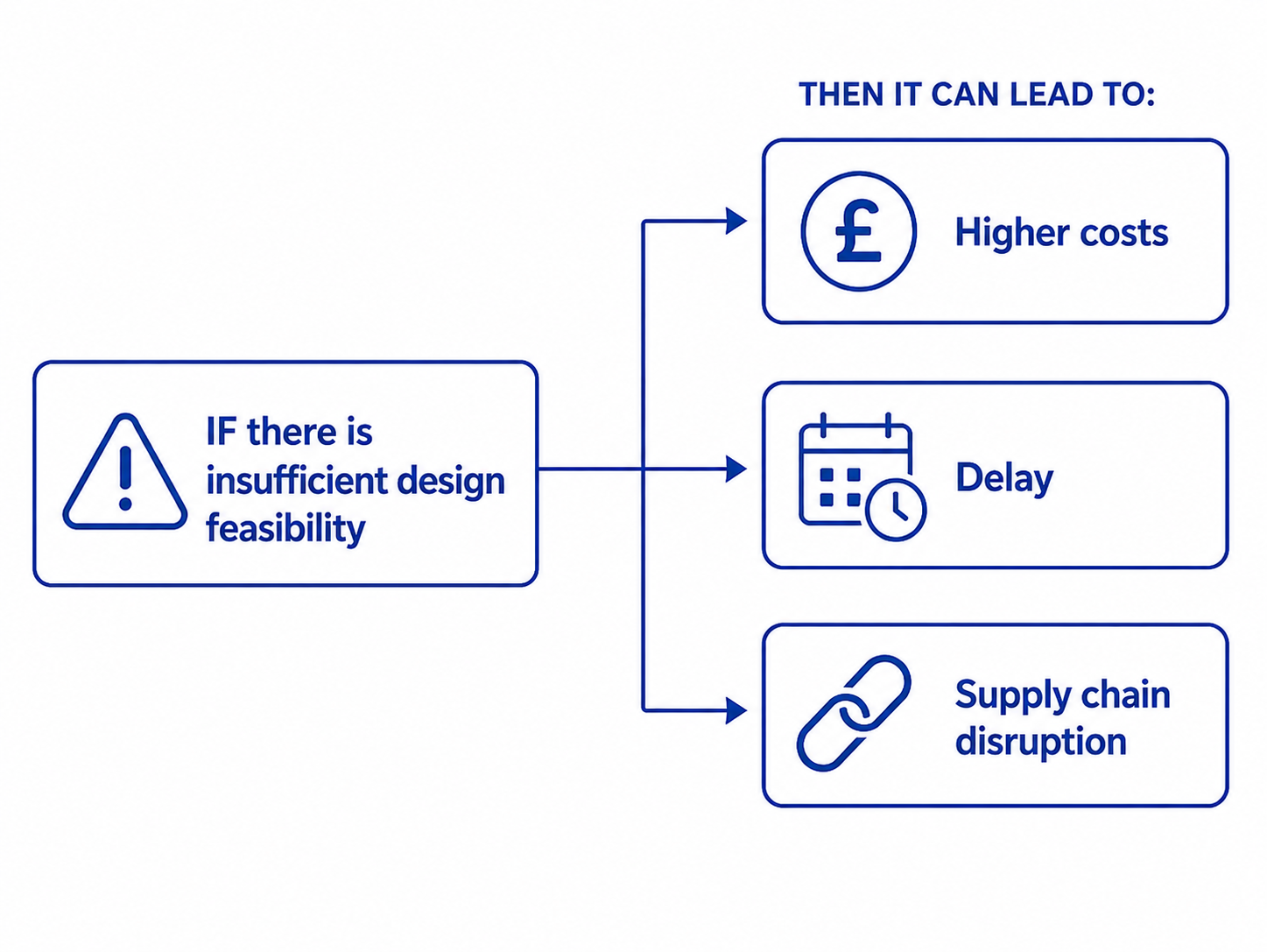
This can lead to:
- Tool modifications
- Extra sampling loops
- Longer development time
- Manual trimming
- Higher scrap rates
- Longer cycle times
- Assembly issues
- Cosmetic rejects
- Dimensional problems
- Production delays
That is why design feasibility matters before tooling begins.
At this stage, changes are usually quicker, simpler and more cost-effective to make.
This is the value of early, upfront engineering conversations.
It is not about slowing the project down.
It is about reducing the chance of expensive surprises later.
In many tooling projects, the best cost saving happens before the mould tool is made.
Why “cutting metal” comes later
Tool manufacture should only begin once the design, DFM review and customer approvals are aligned.
By that stage, everyone should understand the application’s functionality, appearance, expectations, and risks.
Only then, with the customer’s approval does it make sense to cut metal.
We would rather spend time asking the right questions early than trying to fix avoidable problems later.
Supporting technically demanding sectors
Dudley Associates supports customers across technically demanding industries where moulded plastic components need to perform reliably, assemble correctly and meet repeatable production standards.
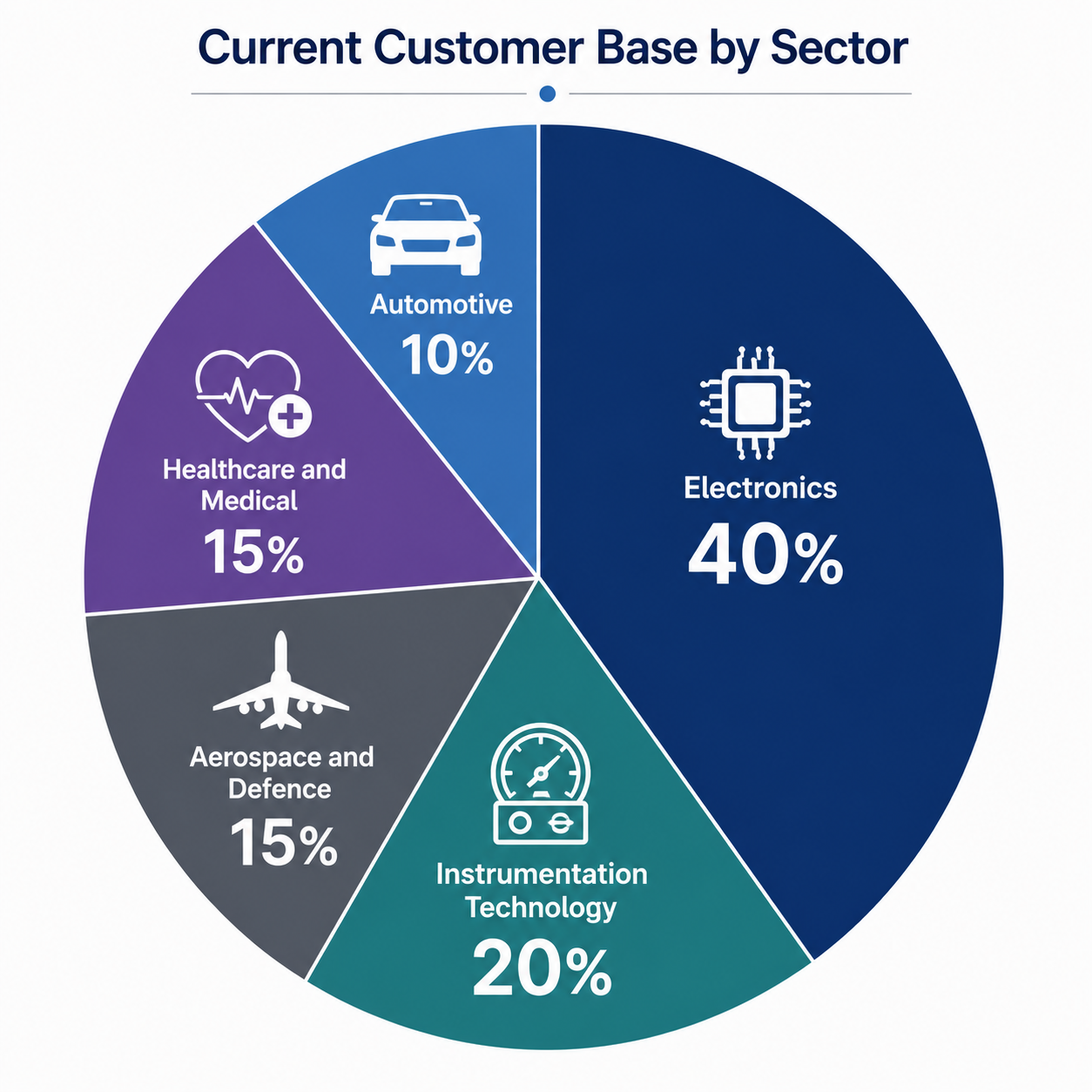
These sectors often require more than a basic moulding quote.
They need practical engineering input, material understanding, tooling experience and clear communication before a project moves into manufacture.
That is why our initial feasibility and DFM process is so important.
Whether the application is an electronic enclosure, an instrumentation housing, a medical device component, an aerospace part or an automotive assembly, the same principle applies:
The earlier mouldability is reviewed, the easier it is to reduce risk.
Dudley Associates is also certified to ISO 9001:2015, supporting a structured approach to quality, process control and continuous improvement.
For customers, this matters because tooling and injection moulding projects rely on consistency.
A successful moulded component is not only about getting the first sample right. It is about creating a process that can be repeated, controlled and trusted throughout production.
That begins long before the first part is moulded.
It begins with feasibility review, DFM, material consideration, tooling strategy and honest technical feedback.
The main takeaway
A good moulded product starts with a proper technical review.
Injection moulding terminology is useful, but only when it helps customers understand the decisions being made.
At Dudley Associates, we use feasibility review, DFM, Moldex3D analysis and practical tooling experience to help customers understand whether a plastic component is ready for injection moulding, what risks need to be considered and what changes may improve the route into production.
Because successful tooling is not just about manufacturing a mould.
It is about making sure the product, tool and process are aligned before the investment begins.
If you are developing a plastic component and want to understand whether it is ready for injection moulding, Dudley Associates can help review the design, explain the risks and guide the route from idea, sketch, prototype or CAD model into a mouldable production part.
We’d love to hear about your next market-leading concept.