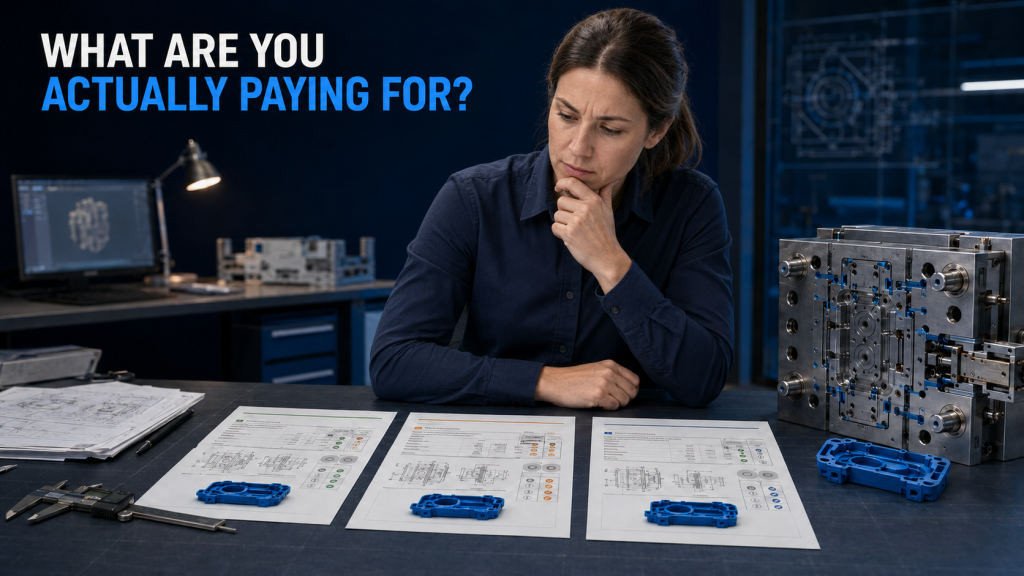
The lowest quotation is not necessarily the best value. But a higher price does not automatically mean a better tool. Here is how to understand what you are actually paying for.
Investing in an injection mould tool can feel uncomfortable.
Whether the tool costs £5,000 or considerably more, it still represents an important investment—often made before you have held a production component, confirmed its final fit or demonstrated reliable repeat production.
Then the quotations arrive.
One supplier recommends aluminium. Another specifies P20 steel. A third proposes hardened inserts, additional sliders, a hot-runner system and a completely different number of cavities.
The prices may be thousands of pounds apart, despite everyone apparently quoting for the same plastic component.
So, how do you know whether you are paying the right amount?
The honest answer is that there is no universally correct price for an injection mould tool. There is, however, a correct way to assess whether a quotation is technically appropriate, commercially competitive and structured to protect your investment.
The short answer
You are probably paying the right amount when:
- The tool specification matches the intended production volume and lifespan.
- The proposed design can manufacture the component consistently.
- The quotation clearly explains what is included and excluded.
- The specified polymer, tolerances and application have been considered.
- Tool design approval is completed before manufacturing begins.
- Sampling, inspection, modification and approval responsibilities are defined.
- Payments are linked to measurable project progress.
- The tool can be maintained, modified and supported throughout production.
A cheap tool that cannot produce an approved component is not competitive.
It is simply an unfinished project with a low starting price.
Why do injection mould tool prices vary so much?
An injection mould tool is not selected from a catalogue. It is designed and manufactured around a particular component, polymer, production volume and quality requirement.
The largest influence on cost is normally the amount of engineering, machining, fitting and validation required to create a reliable production tool.
Several factors determine that workload. 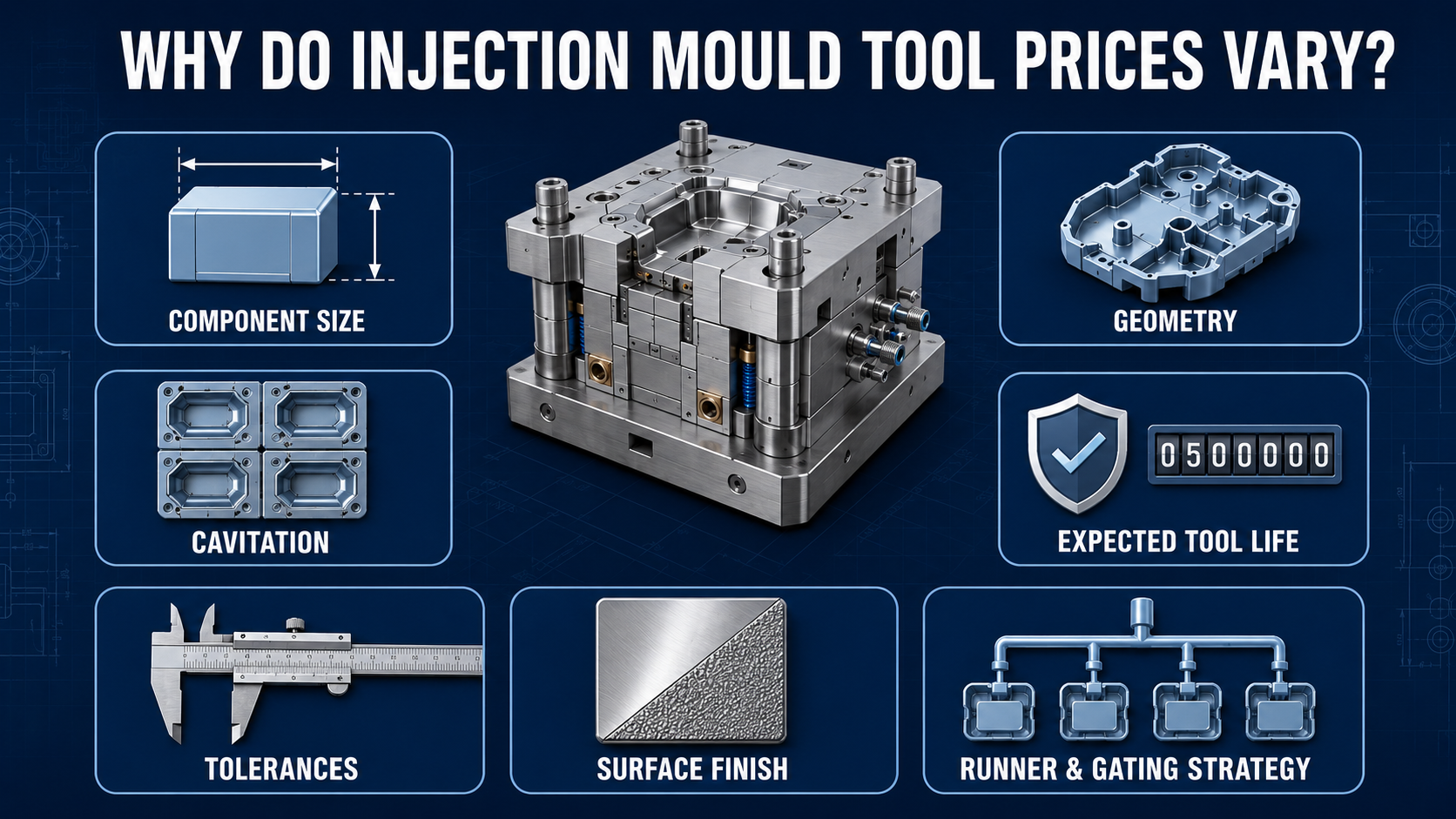
Component size
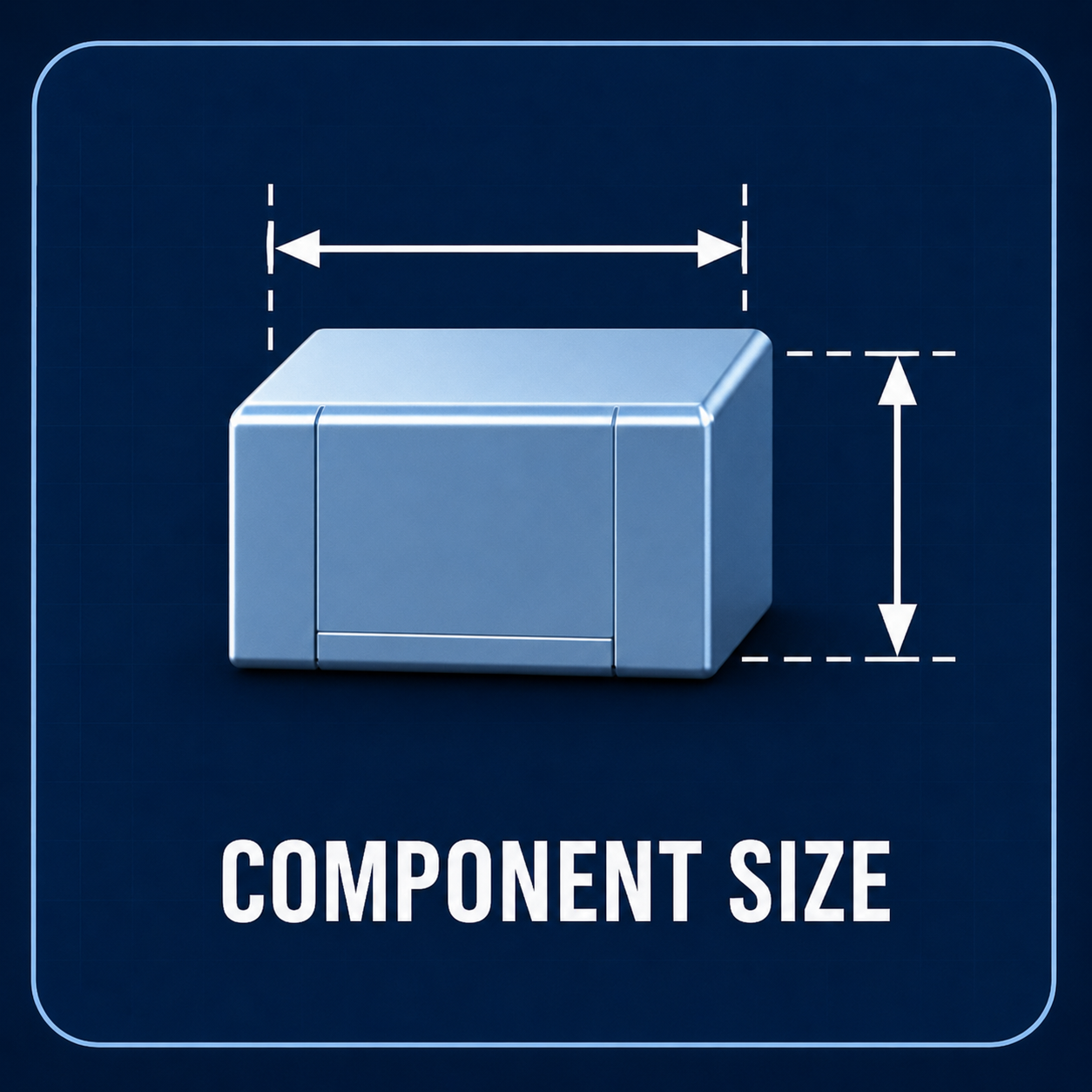
A large automotive enclosure or defence equipment housing requires more tool material, larger plates and more machining than a small connector body.
The finished tool may also require a larger injection moulding machine. This affects the tool construction, lifting arrangements and eventual production costs.
Part geometry
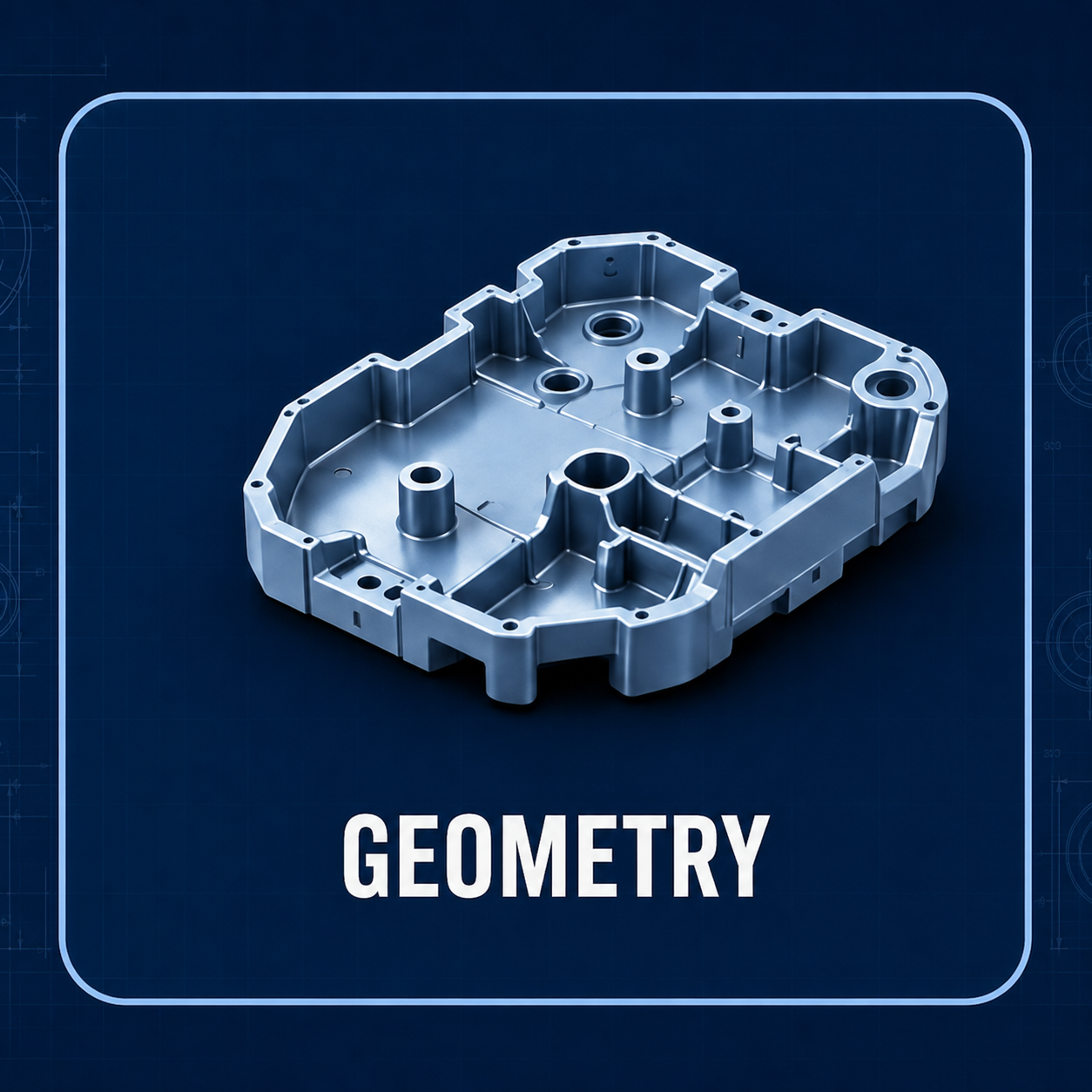
A simple open component may only require a straightforward core-and-cavity tool.
A component containing side holes, recessed connectors, clips, internal threads, snap features or return details may require:
- Sliders
- Lifters
- Core pulls
- Collapsible cores
- Unscrewing mechanisms
- Hand-loaded inserts
- Complex shut-offs
Every additional movement must be designed, manufactured, fitted and proven.
It must then continue to operate reliably for potentially hundreds of thousands of production cycles.
Number of cavities
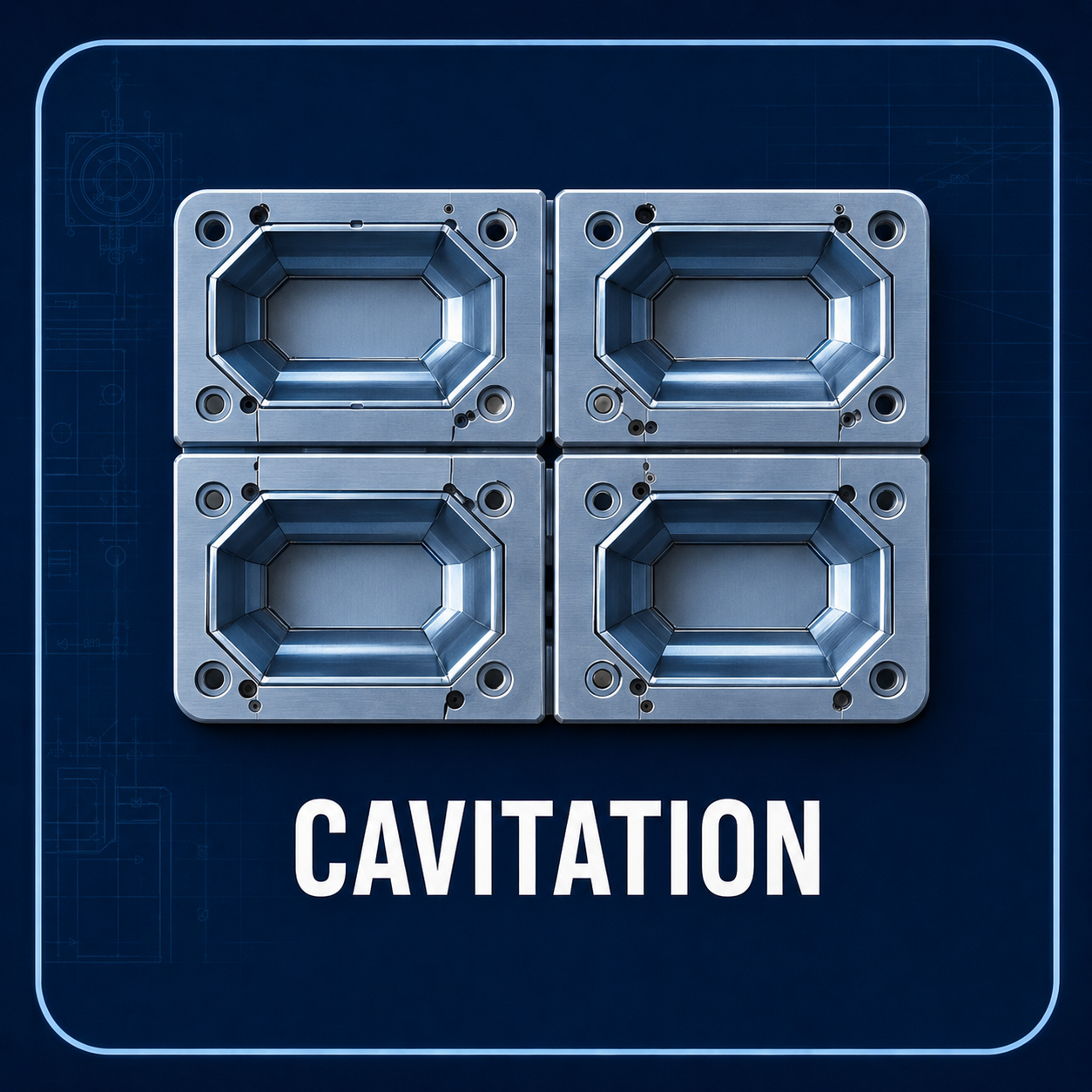
A single-cavity tool will normally cost less than a four- or eight-cavity tool.
That does not automatically make it the most economical option.
Additional cavities allow more components to be produced during each moulding cycle, reducing unit cost and increasing production capacity. The correct decision depends on annual demand, lifetime volume, required output and available moulding capacity.
The right question is not:
“Which tool is cheapest?”
It is:
“Which tooling strategy gives us the correct balance between investment, capacity and unit cost?”
Tool material and expected life
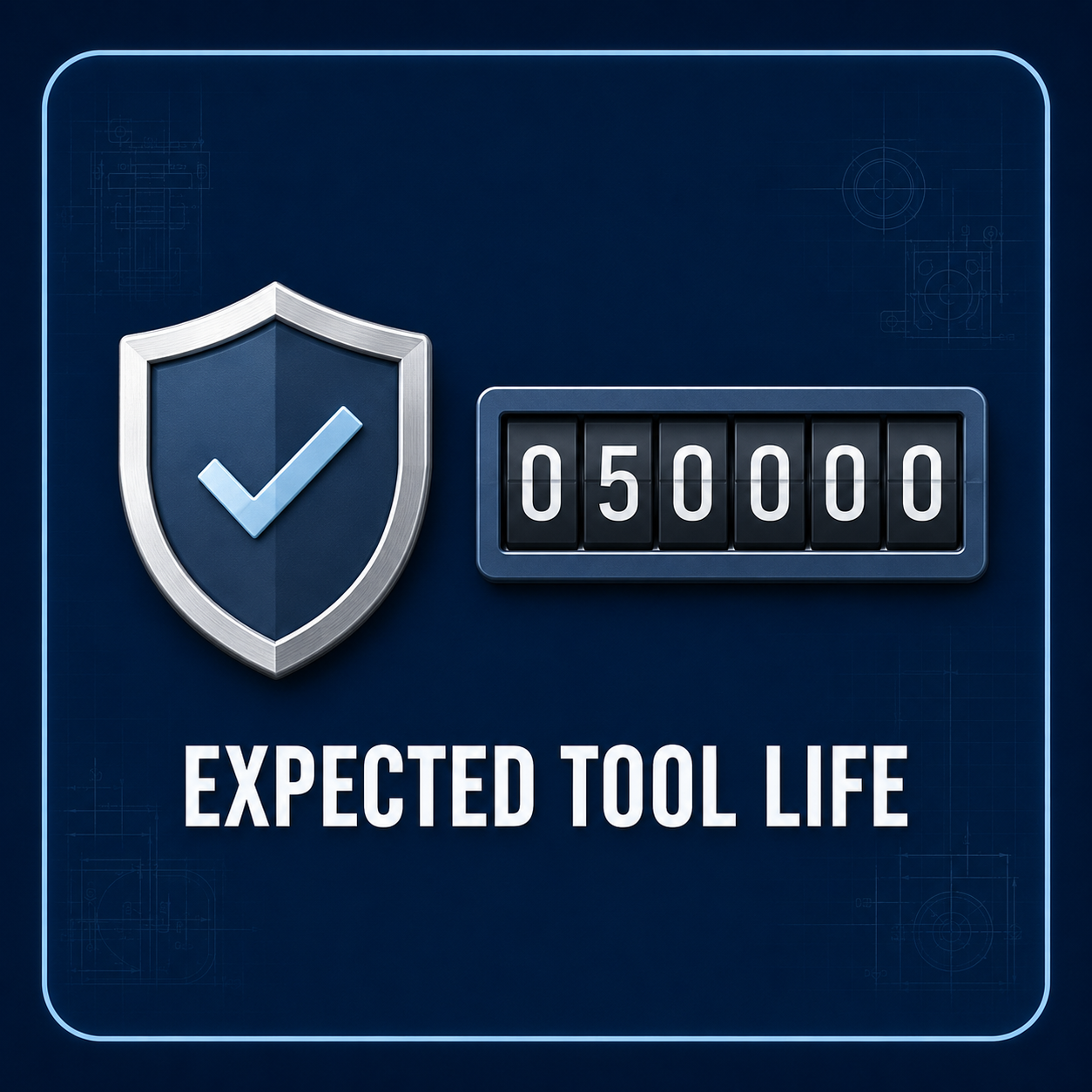
A low-to-medium-volume product does not always require a fully hardened steel tool.
Depending on the component, polymer, production forecast and maintenance strategy, the appropriate solution could be:
- Aluminium production tooling
- P20 or pre-hardened steel
- P20 with hardened inserts in high-wear areas
- Fully hardened tool steel
- A hybrid construction using replaceable inserts
The specification should reflect how many components the tool is expected to manufacture, the material being processed and the consequences of tool wear.
Abrasive glass-filled polymers, corrosive materials and high-temperature engineering thermoplastics can require more resistant tool steels, specialist coatings or hardened components.
Paying for a million-shot tool when the lifetime forecast is 20,000 parts may be unnecessary.
Buying a lightly constructed tool for a safety-critical product with a long production life may prove considerably more expensive.
Tolerances and component function
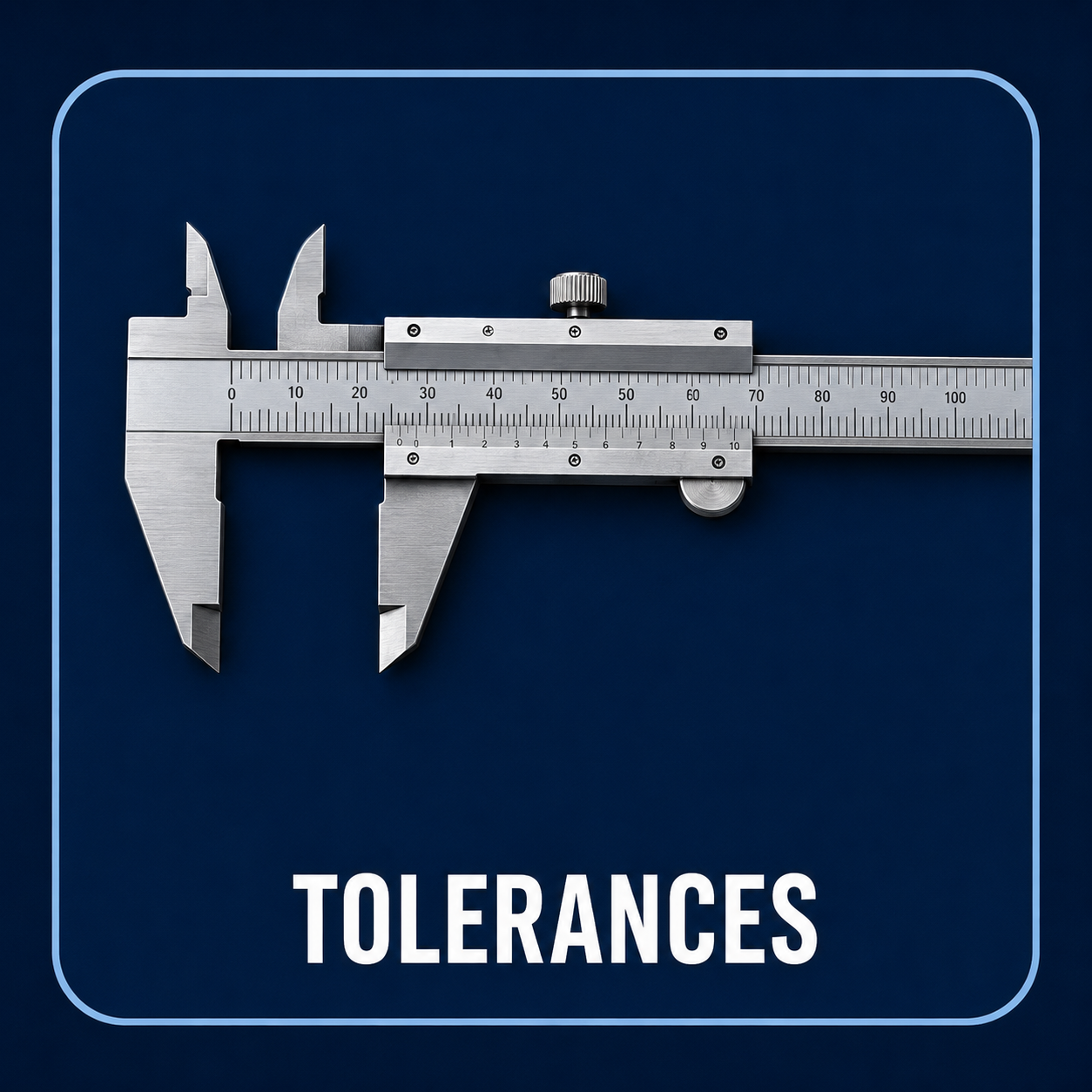 Not every dimension on a plastic component requires the same level of control.
 An electronics enclosure may need reliable snap-fit engagement and accurate alignment with a PCB.
 An automotive sensor housing may require controlled sealing faces and connector geometry.
 An aerospace or defence component may include critical interface dimensions, permanent identification and traceability requirements.
 A medical or diagnostic device may require close control of assembly features, fluid paths or functional surfaces.
Tighter tolerances can require:
- More precise machining
- Additional tool fitting
- Controlled cooling
- Detailed dimensional inspection
- Further sampling
- Replaceable or adjustable inserts
- Process validation documentation
If one quotation includes these activities and another does not, the two prices are not directly comparable.
Surface finish and appearance
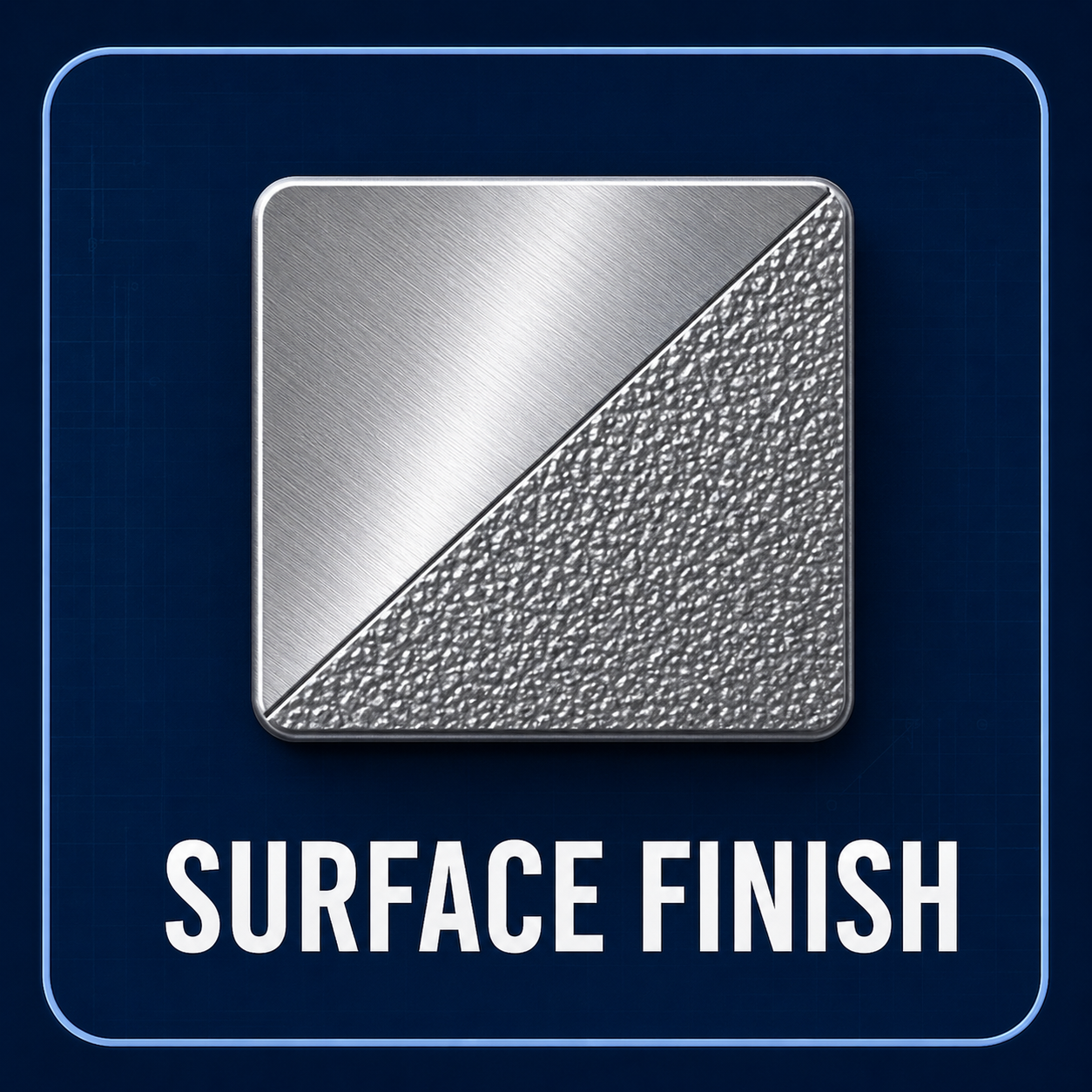
Polishing, texture, graining and other cosmetic requirements all affect tool cost.
An internal mounting bracket does not require the same finish as a customer-facing medical enclosure, automotive interior component or handheld electronics product.
The quotation should identify which surfaces are cosmetic, what finish is required and whether any texture or specialist treatment is included.
Runner and gating strategy
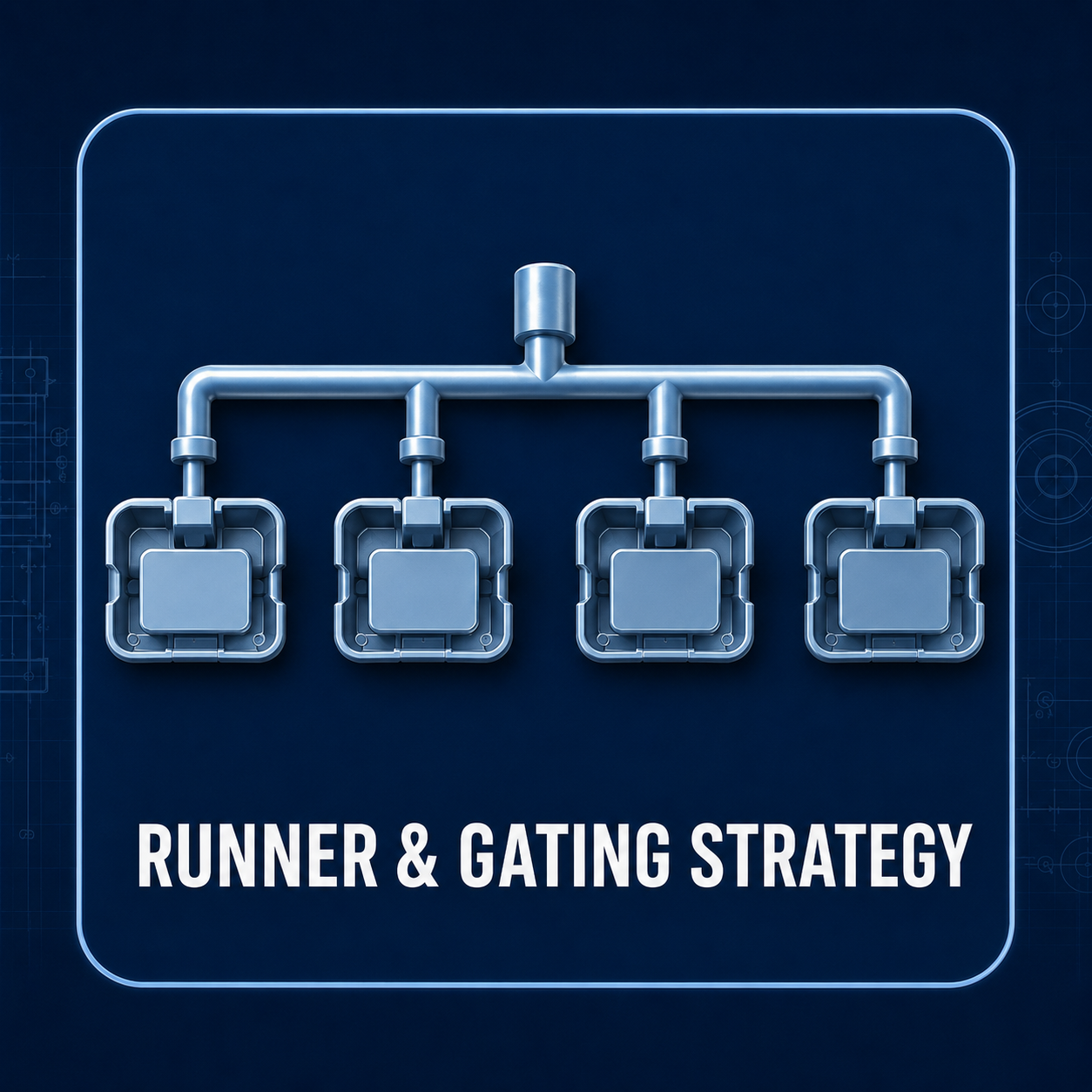
A cold-runner tool may cost less initially.
A hot-runner system can increase the initial tooling cost but may reduce material waste, improve automation and lower long-term unit costs.
Gate position can also influence:
- Filling
- Weld-line location
- Appearance
- Moulding pressure
- Warpage
- Trimming
- Cycle time
This is why the cheapest feed and gating arrangement is not always the lowest-cost production solution.
Compare apples with apples before comparing the price

If three suppliers have made three different assumptions, you do not have three competing prices.
You have three different tooling proposals.
Before comparing quotations, check that every supplier has received the same information:
| Information | Why it matters |
|---|---|
| Current CAD revision | Prevents suppliers quoting different component geometries |
| Nominated production material | Influences shrinkage, wear, processing temperature and tool steel |
| Annual and lifetime volumes | Determines tool construction and number of cavities |
| Required tolerances | Defines machining, fitting and inspection requirements |
| Cosmetic requirements | Influences polish, texture and tool finish |
| Available moulding equipment | Affects tool size, feed system and machine compatibility |
| Validation requirements | Determines sampling, inspection and documentation |
| Expected cycle time | Influences capacity and long-term component cost |
| Automation requirements | Affects ejection, handling and sensing |
| Tool ownership requirements | Clarifies ownership, access and transfer rights |
Without a consistent specification, selecting the lowest number is largely guesswork.
What should a competitive tooling quotation include?
A credible quotation should allow you to understand what is being supplied.
Look for clear information covering:
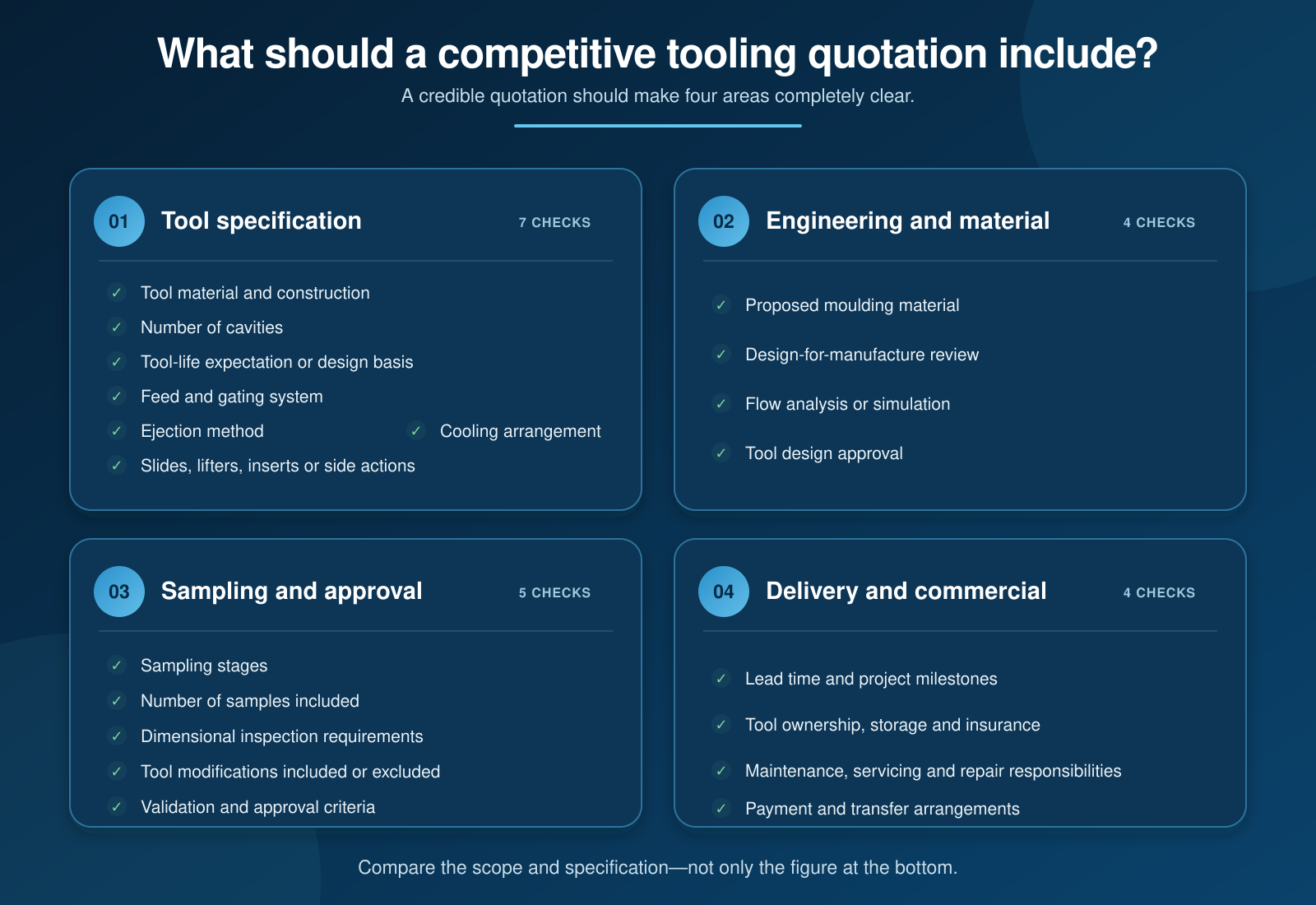
A quotation that simply says “one injection mould tool” leaves too much open to interpretation.
Tool design approval should happen before metal is cut
Tool design approval is a key project milestone.
Before tool manufacture begins, the proposed construction should be reviewed and agreed. Depending on the project, this may include:
- Core-and-cavity arrangement
- Feed and gating strategy
- Ejection method
- Cooling layout
- Split lines and shut-offs
- Sliders, lifters or core pulls
- Replaceable inserts
- Tool materials
- Moulding machine compatibility
- Maintenance access
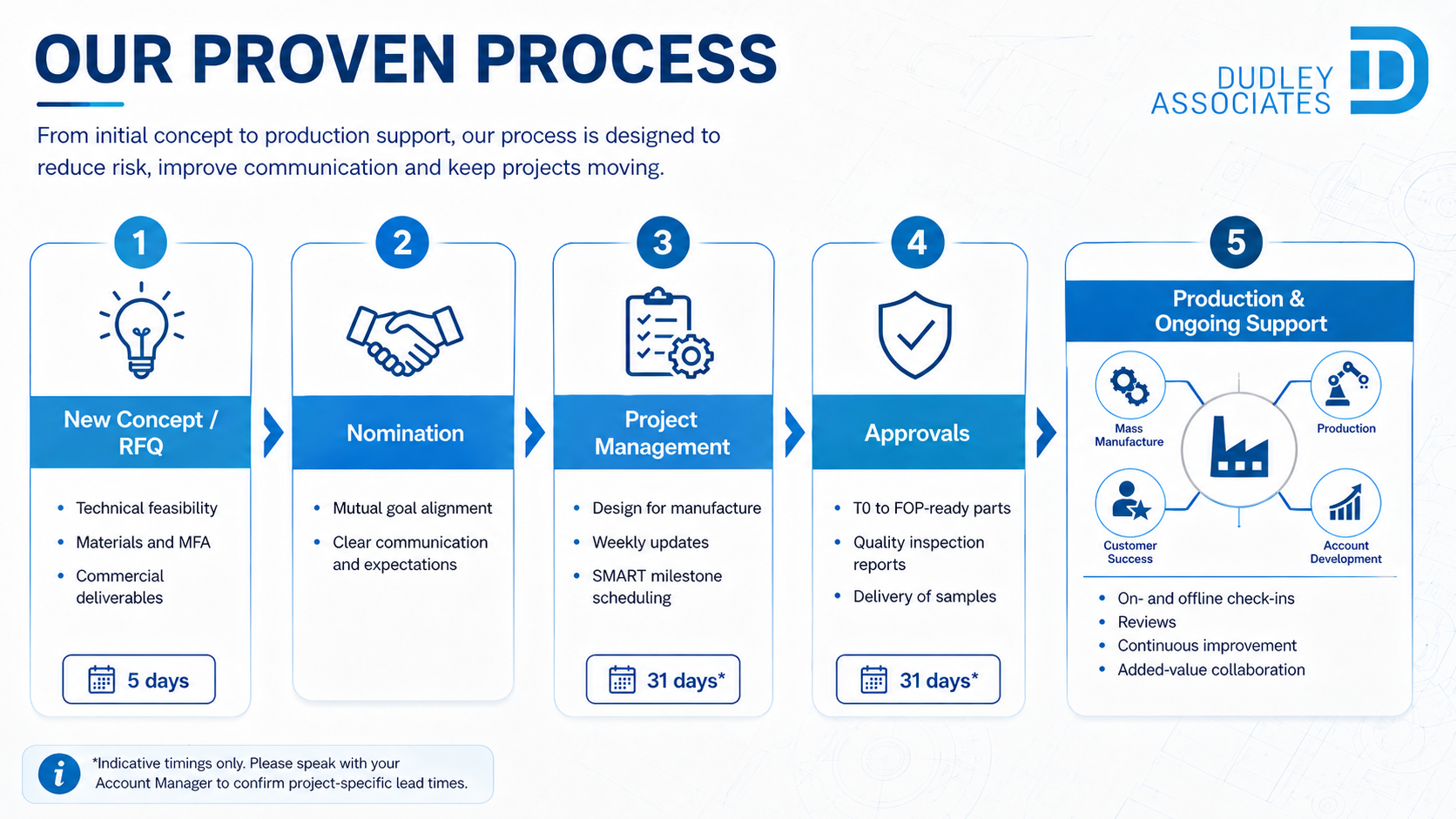
At Dudley Associates, tool design approval is a formal stage within our published Proven Process.
This gives the customer visibility of the intended solution before significant manufacturing work begins. It also provides an opportunity to question assumptions and resolve any remaining design risks before they become expensive tooling modifications.
Flow analysis should not be treated as an afterthought
A component may look perfectly sensible in CAD while still presenting significant moulding challenges.
 At Dudley Associates, Moldex3D analysis is included as part of the tooling development process.
The analysis is used to assess factors such as:
- Material filling behaviour
- Pressure requirements
- Gate position
- Weld-line formation
- Air traps
- Cooling
- Shrinkage
- Warpage
This allows important engineering decisions to be tested before the tool is manufactured.
Simulation cannot remove every development risk, but it can significantly improve the quality of the decisions made before metal is cut.
If one quotation includes this engineering work and another treats it as an optional extra, the headline prices are not directly comparable.
The cheapest quotation can create the greatest financial exposure
Tooling manufactured overseas, including in the Far East, can offer a genuine purchase-price advantage.
That does not automatically make it inferior. For a stable design, clearly defined specification and properly managed programme, overseas tooling may be an appropriate commercial decision.
However, the headline price should not be considered in isolation.
Depending on the supplier and agreement, additional exposure may include:
- International freight
- Import duty and administration
- Additional sample shipments
- Delayed engineering changes
- Travel for trials or validation
- UK tool inspection or adaptation
- Communication across different time zones
- Replacement of non-standard components
- Longer repair or modification cycles
- Production delays while problems are resolved
The central question is not simply whether the tool is manufactured in the UK or overseas.
It is whether responsibility for delivering an approved, maintainable and production-ready tool is completely clear.
Payment terms are part of the quotation
Payment structure is frequently overlooked when comparing tooling suppliers.
Some suppliers may require most or all of the tooling value before the customer has received approved production samples. This can leave the buyer financially exposed if the tool does not meet the agreed specification.
Staged payment terms can reduce that exposure.
An example structure could be:
- 50% with the purchase order
- 40% following delivery of initial samples
- 10% following final approval
Other structures may include separate milestones for tool design approval, T1 sampling and final validation.
The exact percentages are less important than the underlying principle:
Payment should reflect progress, engineering evidence and agreed deliverables.
Before placing the order, establish:
- What triggers each invoice?
- Is tool design approval a formal milestone?
- What constitutes an acceptable T1 submission?
- What happens if the component is out of specification?
- Which modifications are included?
- When does ownership transfer?
- What happens if the tool cannot achieve the agreed acceptance criteria?
These questions protect both the customer and the toolmaker.
Producing samples is not the same as proving production readiness
T1 is the first opportunity to evaluate physical components from the new tool, but the contents of a T1 submission can vary significantly between suppliers.
At Dudley Associates, the T1 stage includes:
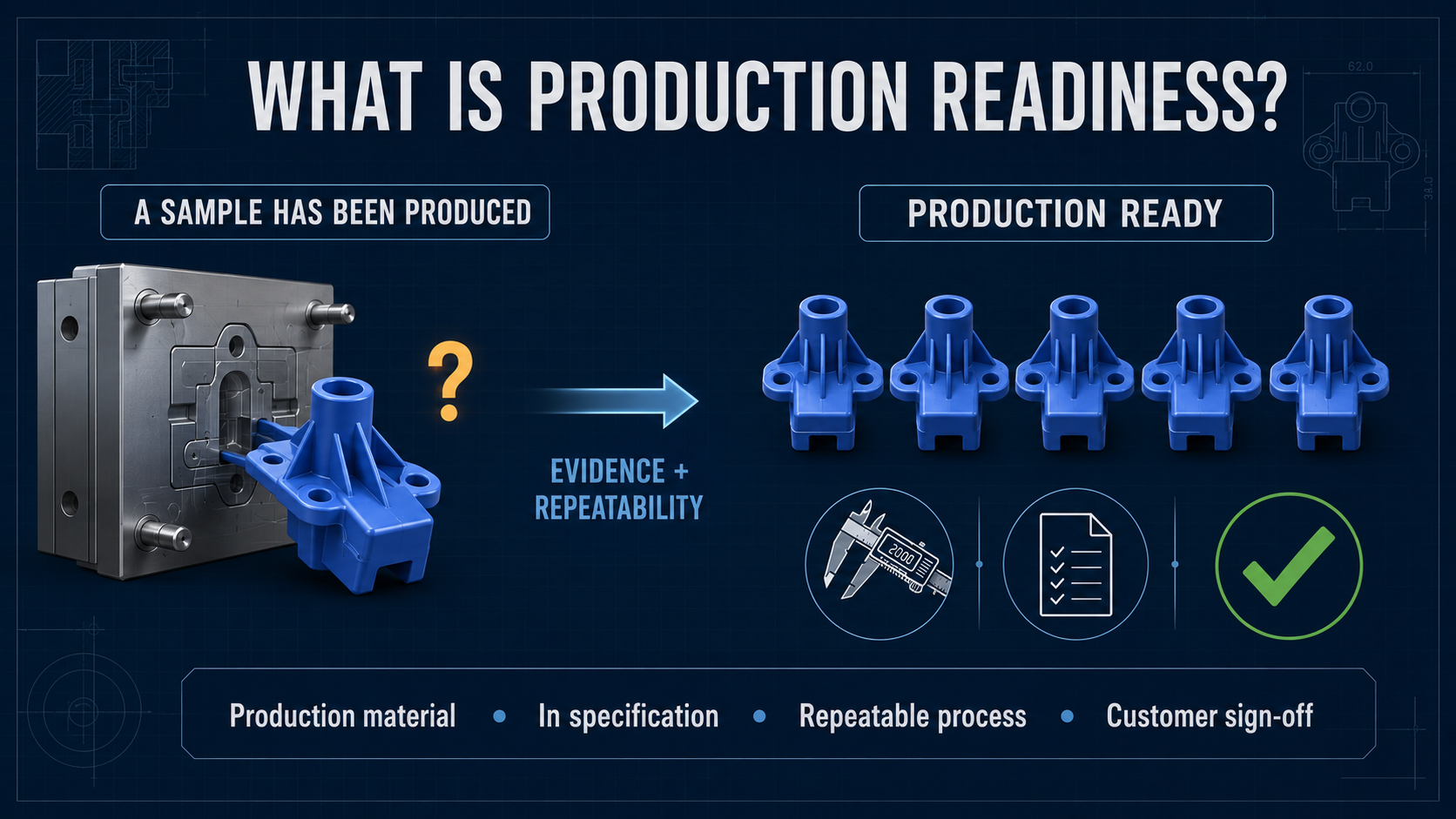
- Initial moulded samples
- Production-intent material required for the trial
- ISIR/PPAP dimensional inspection reports
- The work required to target in-specification, production-ready samples
This provides both physical and dimensional evidence to support the review.
If further optimisation is required, the T1 findings inform the agreed tooling or process adjustments before final approval.
A tool should not be considered complete simply because it has produced a plastic component.
Production readiness means demonstrating that the tool can repeatedly manufacture components in the nominated production material, within the agreed specification and using an established moulding process.
At Dudley Associates, final tool approval is achieved through formal customer sign-off against the agreed requirements.
A lower tool price can be wiped out surprisingly quickly
Consider an illustrative example.
Supplier A quotes £20,000.
Supplier B quotes £19,000.
The apparent saving is £1,000, or 5%.
If the lower-priced tool then requires a £3,000 modification, the original saving has already disappeared before considering freight, additional sampling or launch delays.
Cycle time can have an even greater effect.
If one single-cavity tool produces 100,000 components at a 30-second cycle and another requires 35 seconds, the slower tool consumes approximately 139 additional machine hours.
At an illustrative machine rate of £60 per hour, that represents more than £8,000 in additional production cost for every 100,000 cycles, before considering labour, energy or lost capacity.
This is why tool price and production economics must be reviewed together.
Ask for the total cost, not just the purchase price
A more useful calculation is:
True tooling cost = purchase price + trials + modifications + freight + validation + maintenance + production inefficiency + replacement risk
Not every factor can be predicted perfectly, but each should still be considered.
A well-designed tool may initially cost more because it includes:
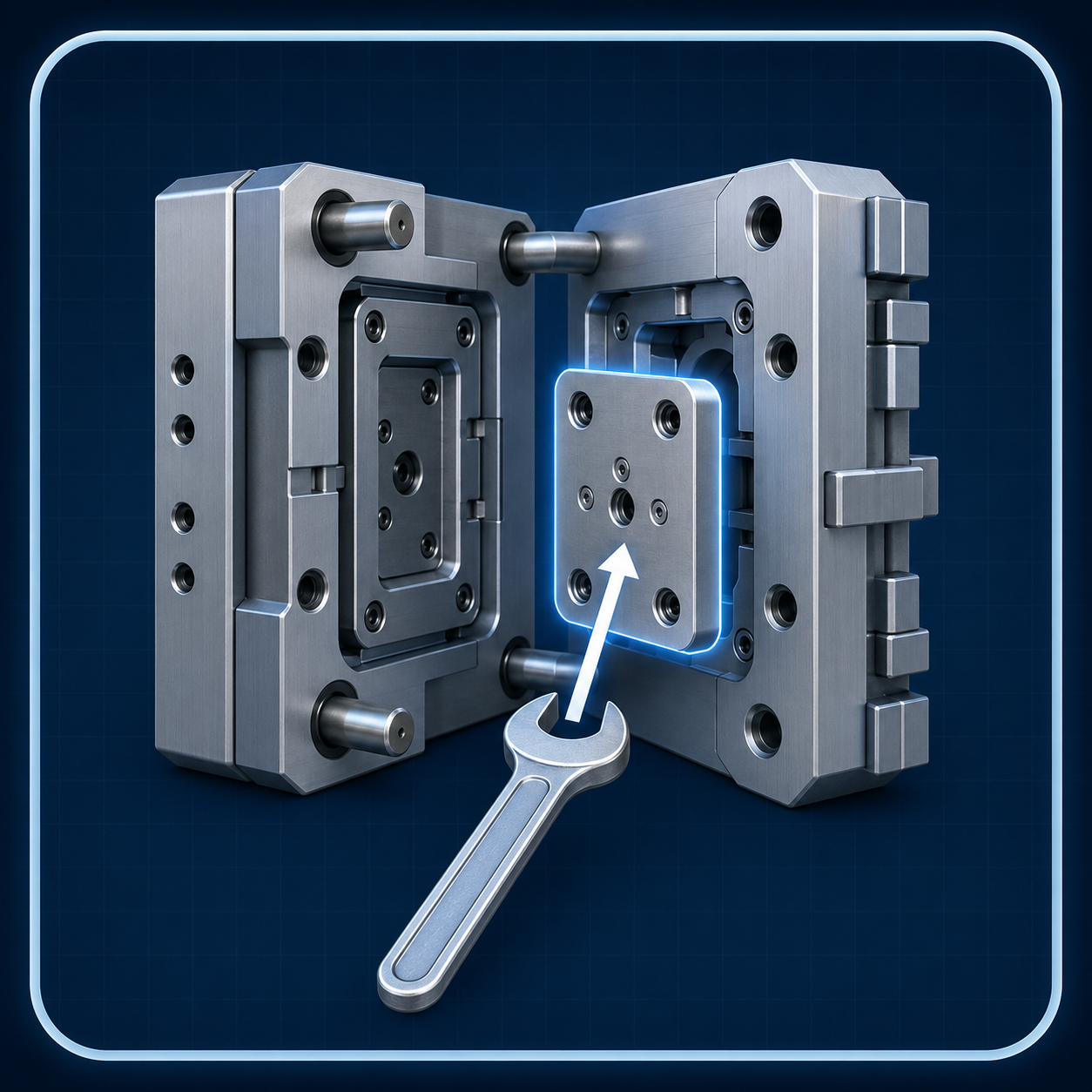 Better maintenance access
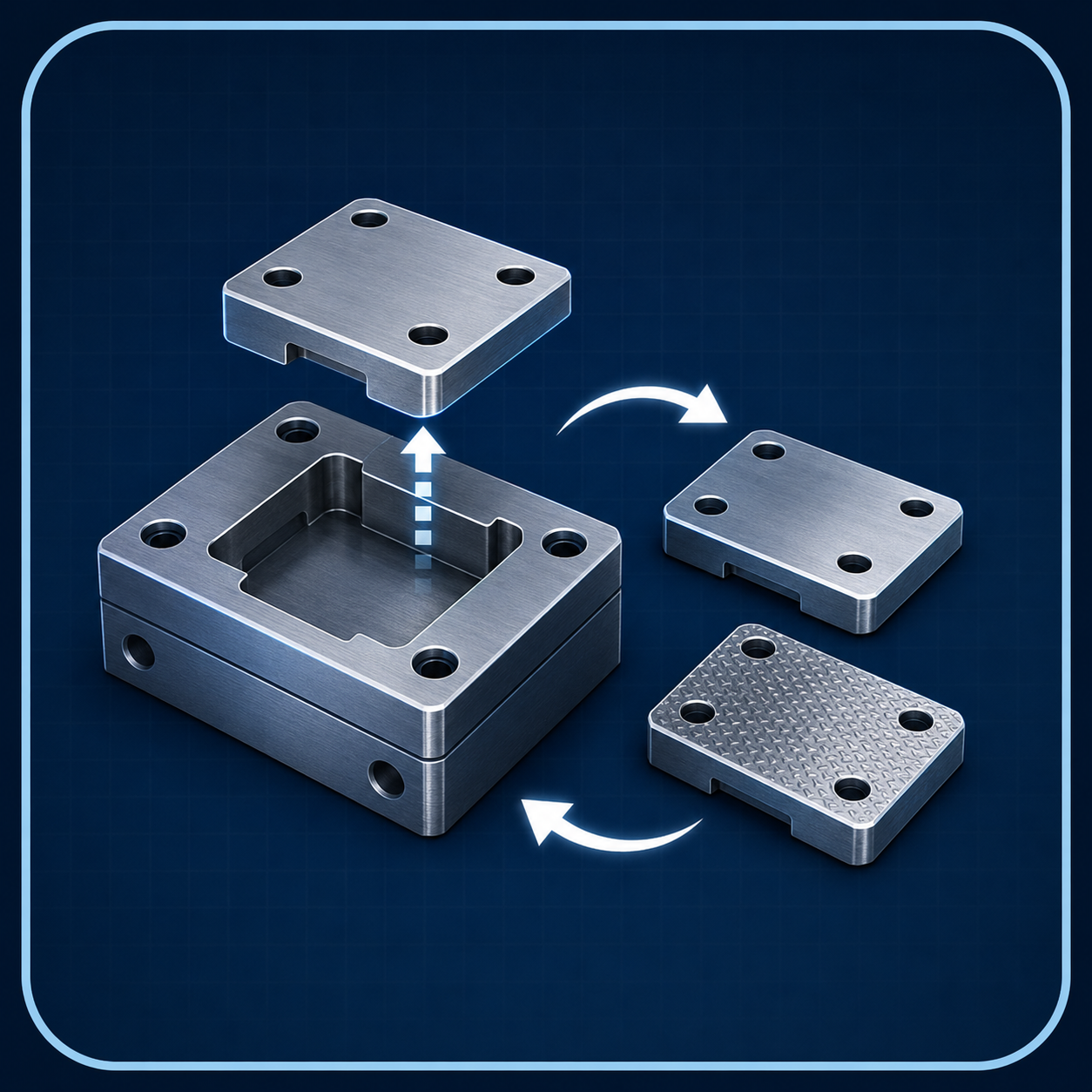 Replaceable wear components
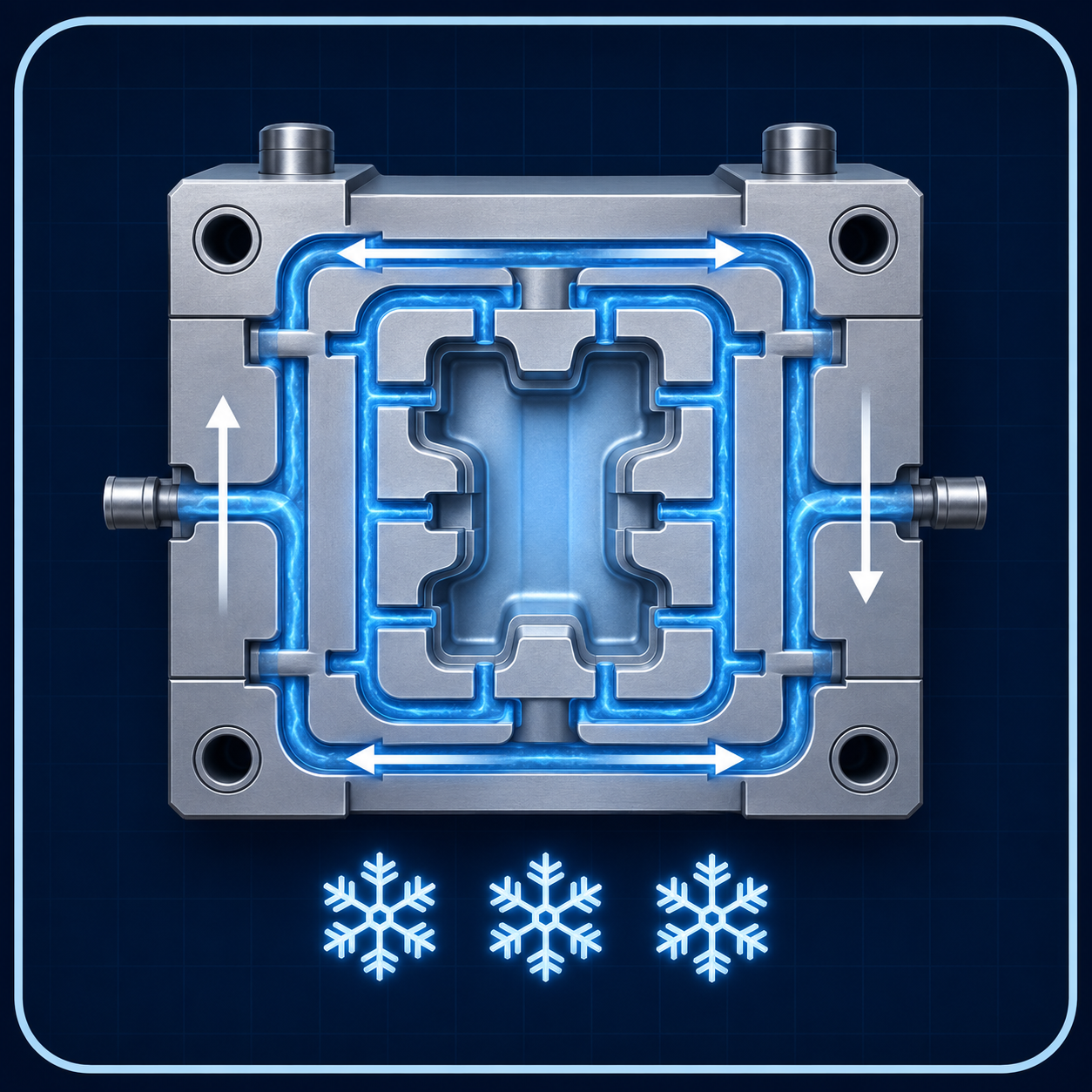 More effective cooling
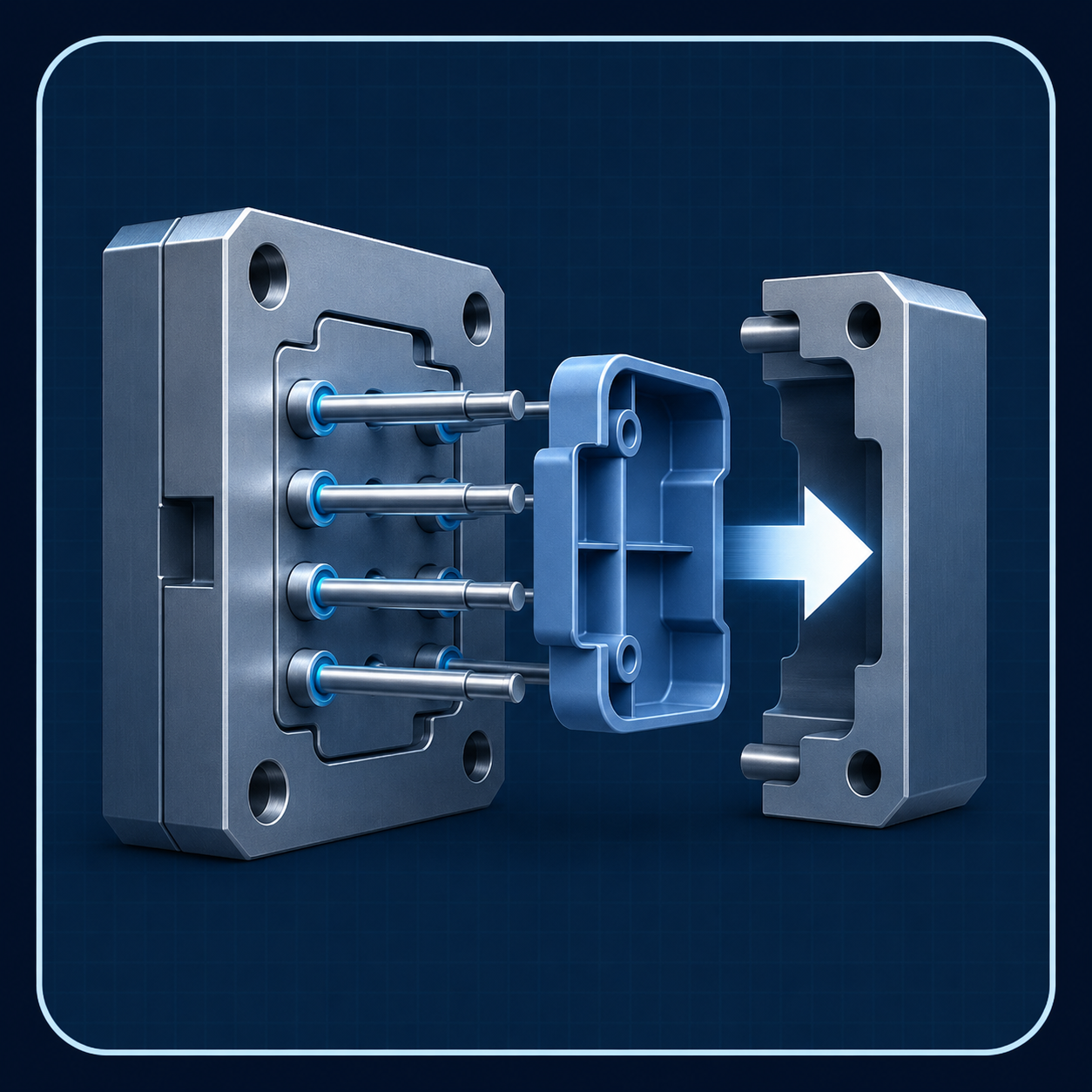 Reliable automatic ejection
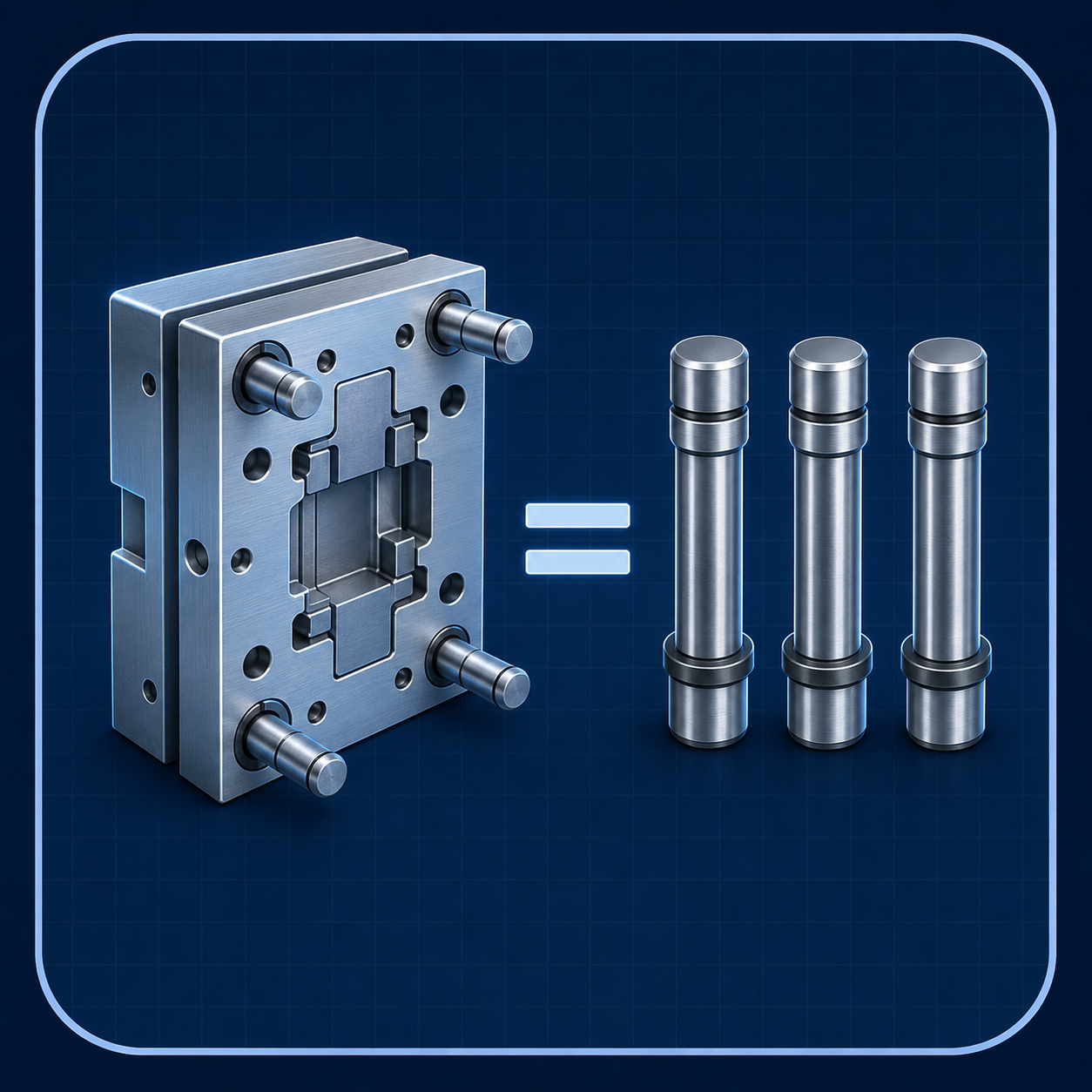 Standardised tool parts
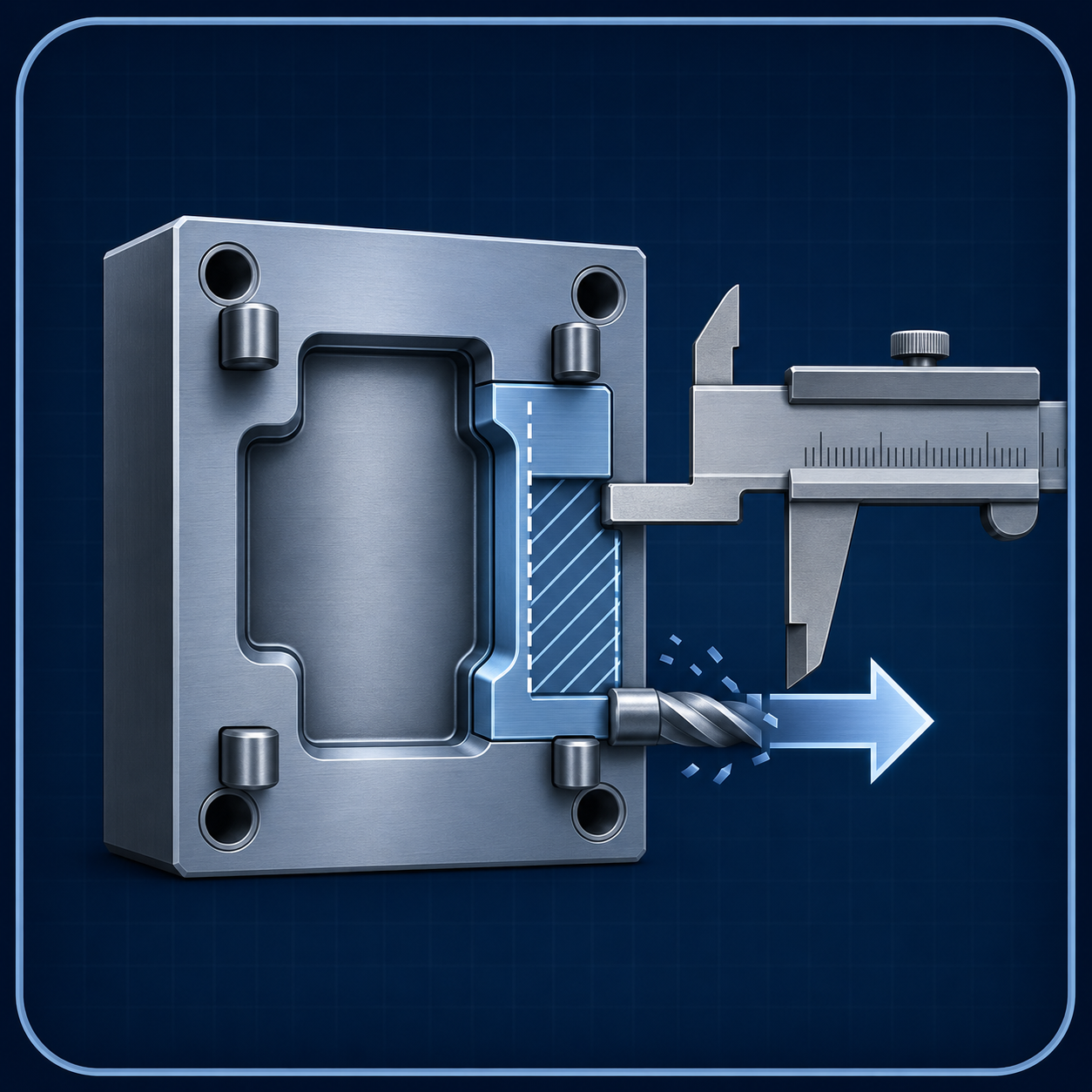 Planned metal-safe adjustments
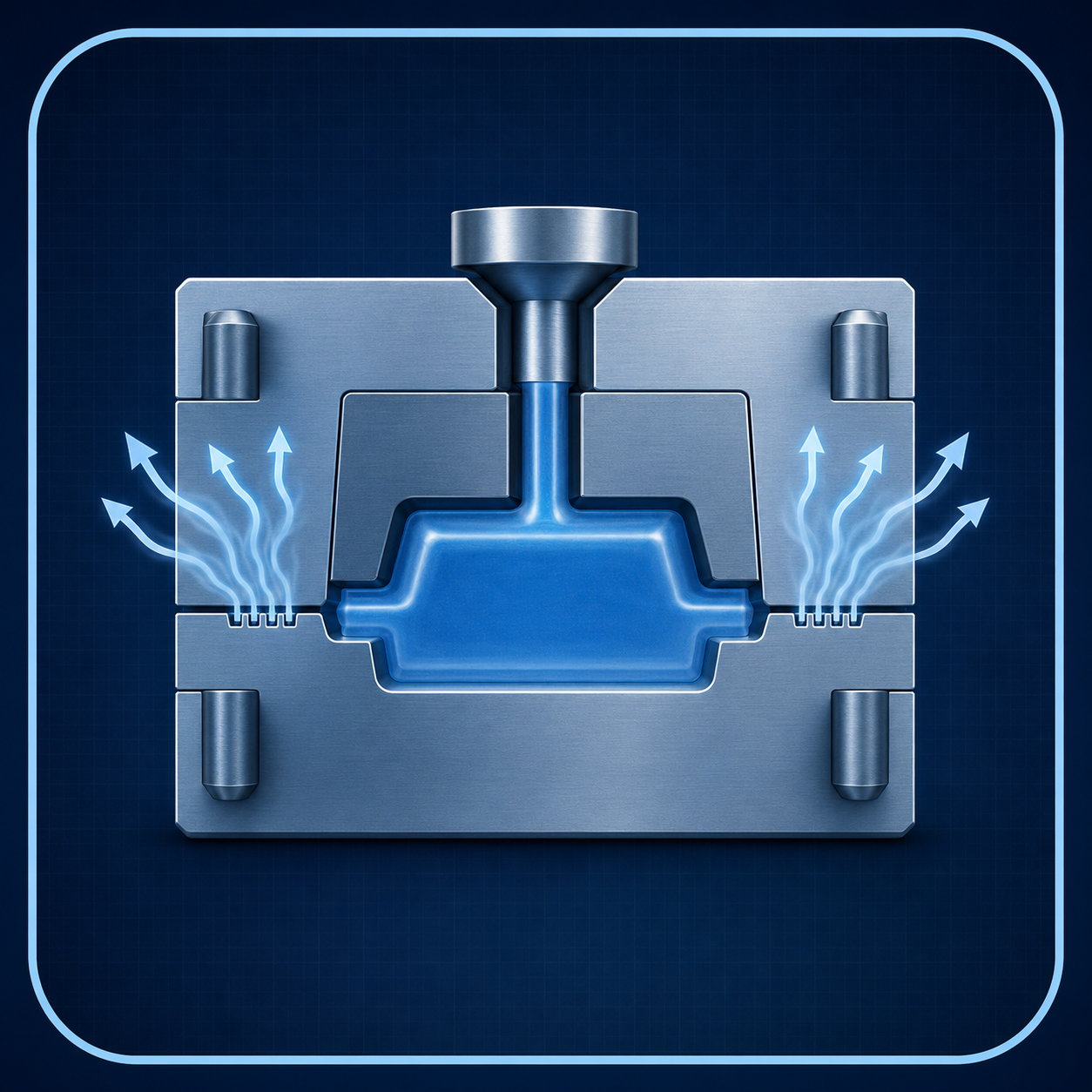 Improved venting
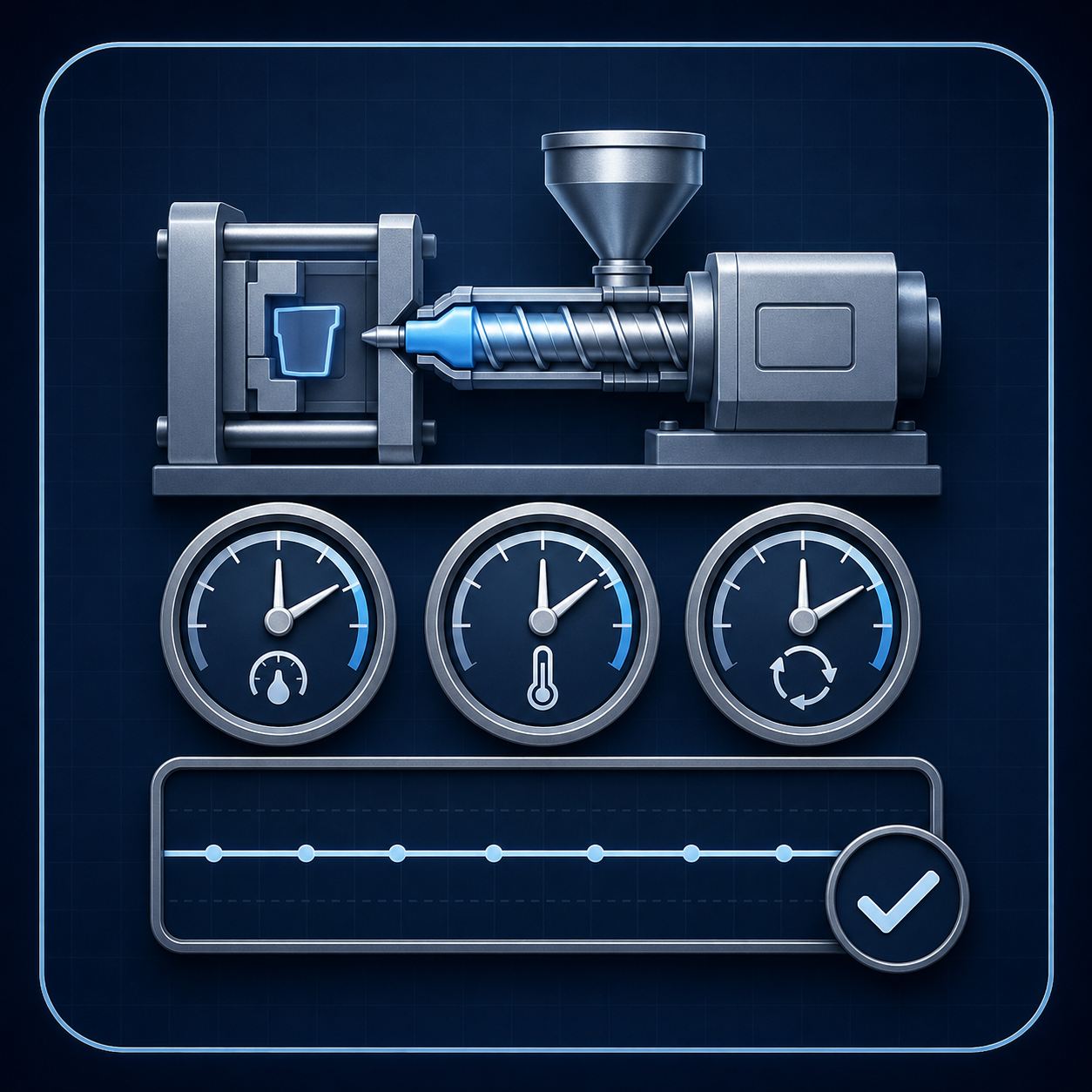 Better process stability
These features may not produce the lowest initial quotation.
They can make the following years of production considerably more predictable.
Warning signs that a tooling quotation may be too cheap
A low price deserves further investigation if:
- No DFM review has been discussed.
- The production material has not been confirmed.
- Tool material is not specified.
- Expected tool life is unclear.
- Flow analysis is excluded or has not been considered.
- Validation is undefined.
- No allowance has been made for sampling.
- Component tolerances have not been reviewed.
- The supplier has not asked about lifetime volumes.
- Tool ownership is unclear.
- Most or all payment is required before approved samples.
- Long-term maintenance support has not been explained.
A competitive supplier should be able to explain how the tool will work, not simply what it will cost.
Warning signs that a quotation may be over-engineered
The highest-priced proposal is not automatically the safest either.
A tool may be unnecessarily expensive if:
- Fully hardened steel is proposed for a very low lifetime volume without explanation.
- The number of cavities exceeds realistic production demand.
- A hot-runner system offers no meaningful operational advantage.
- Unnecessarily tight tolerances have been applied across the entire component.
- Extensive cosmetic finishing is specified for non-visible surfaces.
- Complex tool movements could be removed through a sensible design change.
- Validation exceeds the product’s genuine functional or regulatory requirements.
Good engineering is not about adding as much specification as possible.
It is about specifying what the project genuinely needs.
What should a “no-risk” tooling approach actually mean?
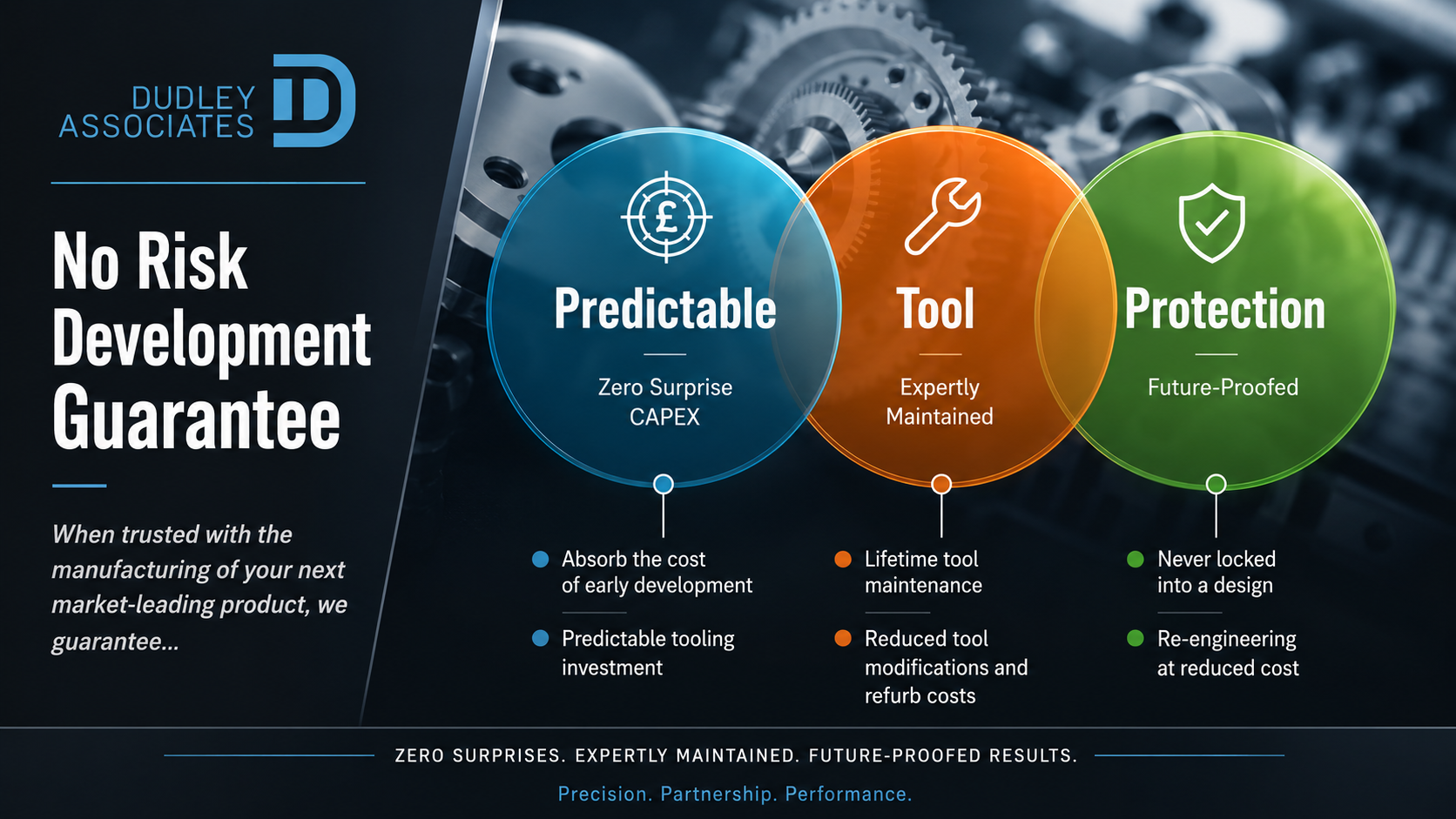
Dudley Associates created the No Risk Development Guarantee. It is designed to remove uncertainty from the development process by providing greater clarity around tooling investment, validation, ongoing maintenance and future design changes.
The objective is simple: fewer surprises, a production-ready tool and a protected route from concept to repeatable manufacture.
The purpose is to prevent the customer from carrying all the financial and technical exposure while the product and manufacturing process are still being proven.
The scope, acceptance criteria and responsibilities should always be clearly documented before the project begins.
No tooling programme can eliminate every technical or commercial risk.
A credible risk-reduction approach should instead make those risks visible and manageable before the customer becomes fully committed.
That should include:
- Early design feasibility
- Clear DFM feedback
- Moldex3D analysis
- Defined material and production assumptions
- Formal tool design approval
- Transparent tool construction
- Agreed sampling stages
- ISIR dimensional inspection
- Measurable acceptance criteria
- Staged commercial commitment
- A clear modification process
- Defined ownership and maintenance responsibilities
- Final customer sign-off
Does UK tooling have to mean a long lead time?
Not necessarily.
Lead time depends on component complexity, tool construction, material availability and current capacity.
Dudley Associates can deliver certain tooling projects in as little as three weeks.
This does not mean every tool can or should be completed within that period. Complex multi-action or multi-cavity production tools will naturally require more design, manufacturing, fitting and validation time.
A credible lead time should be based on the actual project rather than an arbitrary promise.
Why does the quality system matter?
Toolmaking is only one part of the process.
Project control, dimensional inspection, traceability, change management and repeatable production all influence the final result.
Dudley Associates operates an ISO 9001:2015-accredited quality management system. This supports controlled project management, documented inspection and consistent manufacturing processes.
Certification does not replace good engineering, but it provides evidence that the work is supported by an established and audited quality system.
Here’s a Helpful Checklist of Questions…to ask before approving an injection mould tool
Before issuing the purchase order, ask the proposed supplier:
- Why have you selected this tool material?
- What production life has the tool been designed to achieve?
- What volumes and cycle time have you assumed?
- Which design and moulding risks have you identified?
- Is flow analysis included?
- How and when will the tool design be approved?
- Which dimensions may require adjustment after sampling?
- What is included in the initial tool price?
- What could result in an additional charge?
- What is included at T1?
- Will samples be supplied with dimensional inspection reports?
- How will the tool be tested and approved?
- What happens if the samples do not meet the agreed specification?
- When is each payment due?
- Who legally owns the tool?
- How will the tool be maintained?
- Can it be transferred to another moulder if required?
- Will tool drawings, data and spare-part information be available?
- What constitutes final customer approval?
- Who is accountable for achieving a production-ready result?
If a supplier can answer these questions clearly, you are in a much stronger position to assess whether the quotation represents genuine value.
So, are you paying the right amount?
The right amount is not necessarily the lowest quotation.
It is the amount required to create a tool that:
- Produces conforming components
- Supports the intended production volume
- Processes the specified material reliably
- Can be maintained and modified
- Meets the required inspection and validation standards
- Protects the customer’s investment during development
- Reaches production readiness through clear evidence and customer sign-off
Price still matters. It should be challenged and understood.
But the most useful comparison is not:
“How much does the tool cost?”
It is:
“What must happen before this tool is considered complete, approved and ready for production?”
That question usually reveals far more than the number at the bottom of the quotation.
Discussing a new injection moulding project?
If you are comparing tooling quotations or are unsure which construction is appropriate for your component, Dudley Associates can review the design, production material, forecast volumes and validation requirements. Please feel free to reach out to have chat.
The objective is not to specify the most expensive tool.
It is to establish the right tooling strategy for reliable, repeatable production.